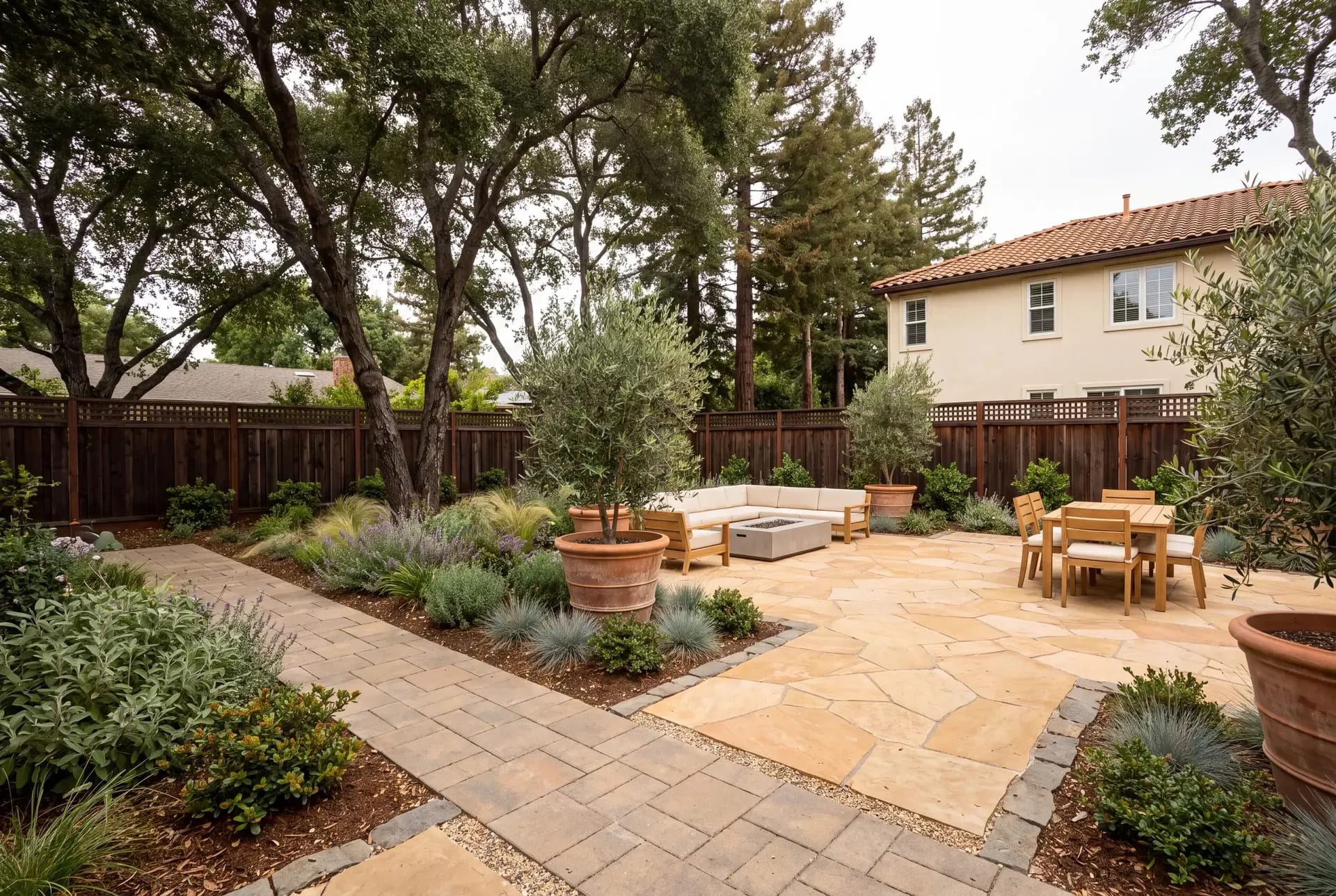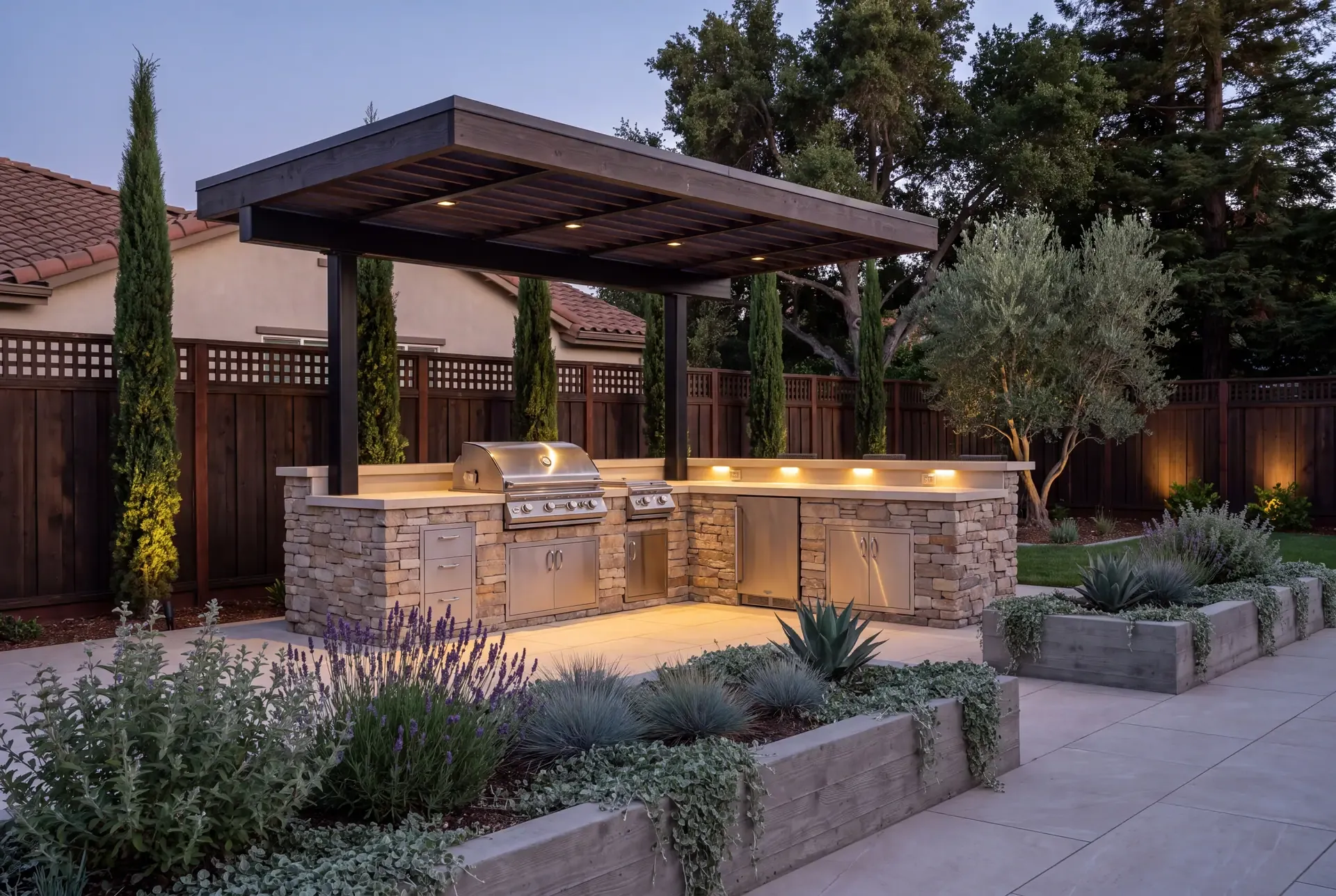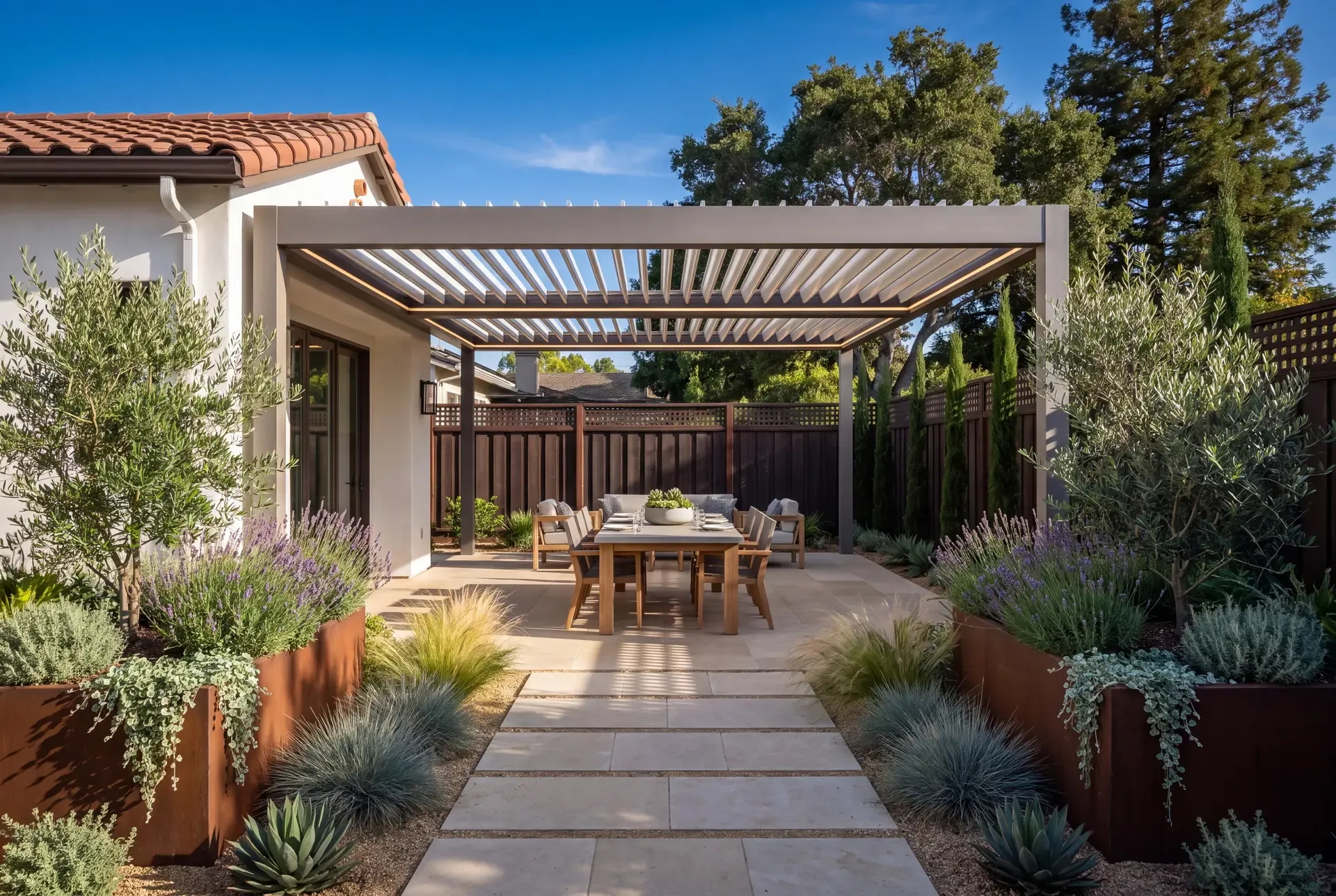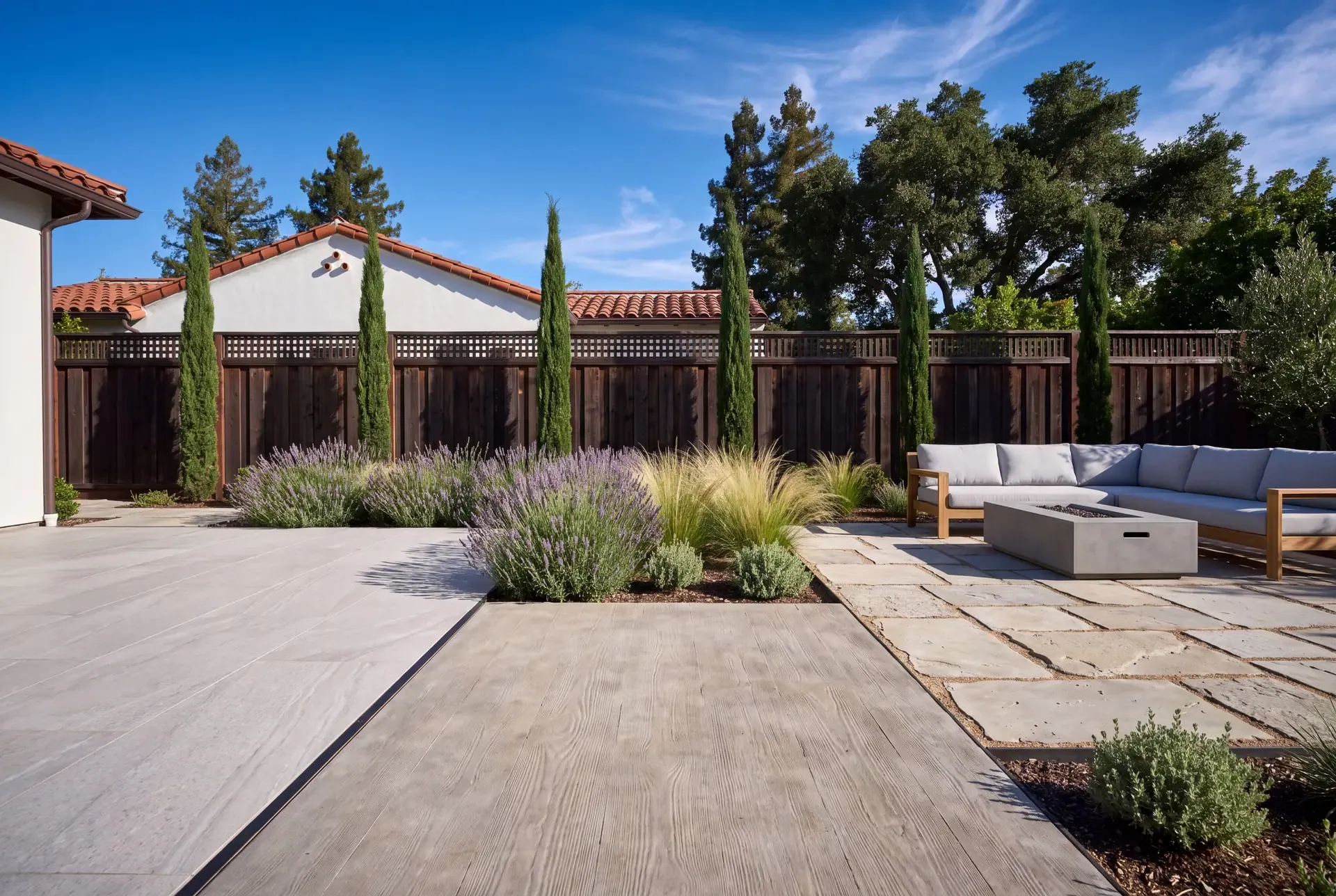
The choice comes down to soil movement. Concrete pavers, porcelain pavers, natural stone, poured concrete, and decomposed granite all make viable patios, but the soil under your yard determines which stays flat. Much of the South Bay sits on expansive clay, and that changes the calculus entirely.
The Baseline: Expansive Clay Soil
Santa Clara Valley has extensive areas of clay soil, particularly in the flatlands that were historically seasonal wetlands and floodplains — most of San Jose, Sunnyvale, Santa Clara, and Campbell. This soil expands as it absorbs moisture and contracts as it dries out, exerting enough force to lift foundations and crack slabs.
The implication for patios is straightforward: a monolithic poured concrete slab, even with control joints and rebar, will eventually crack on expansive clay unless the soil has been stabilised or the slab is structurally reinforced at a level that is impractical for most residential patios. A unit paver surface — individual pieces on a sand-and-aggregate base — flexes with the movement. Individual pavers may shift slightly, but the field remains usable and can be reset by lifting and re-bedding the affected units.
The Material Comparison
Surface | Movement & Cracking | Repairability | Slip Resistance | Stain Resistance | Joint Weeds | Best For |
|---|---|---|---|---|---|---|
Concrete pavers | Flexes with soil movement; no slab cracks | Lift and replace individual units | Good (textured surfaces) | Moderate; needs sealing | Joint sand and stabiliser required | Patios, driveways, walkways on clay soil |
Porcelain pavers | Same flexibility as concrete pavers | Replace individual units | Moderate to good; textured finishes best | Excellent; non-porous body | Tight joints; polymeric sand | High-use kitchens, dining areas, pool surrounds |
Natural stone | Varies by stone and base | Replace individual pieces | Excellent on cleft or riven finishes | Varies; some stone stains easily | Mortar or sand joints | Feature patios, garden paths, seat walls |
Poured concrete (broom) | Cracks on clay without engineering | Patch or resurface; colour match difficult | Good (broom finish) | Moderate; stains show | N/A | Stable subgrade only |
Poured concrete (stamped) | Same cracking risk | Same as broom | Poor to moderate (smooth surfaces) | Moderate; sealer needed | N/A | Garages, driveways on stable soil |
Poured concrete (exposed aggregate) | Same cracking risk | Same as broom | Good (exposed stone texture) | Good; aggregate hides stains | N/A | Pool decks, high-traffic areas on stable soil |
Decomposed granite / gravel | Self-healing; no cracking | Rake and replenish | Good | Poor; can migrate | Weeds through; fabric needed | Paths, informal seating, planting areas |
Base Preparation Is Everything
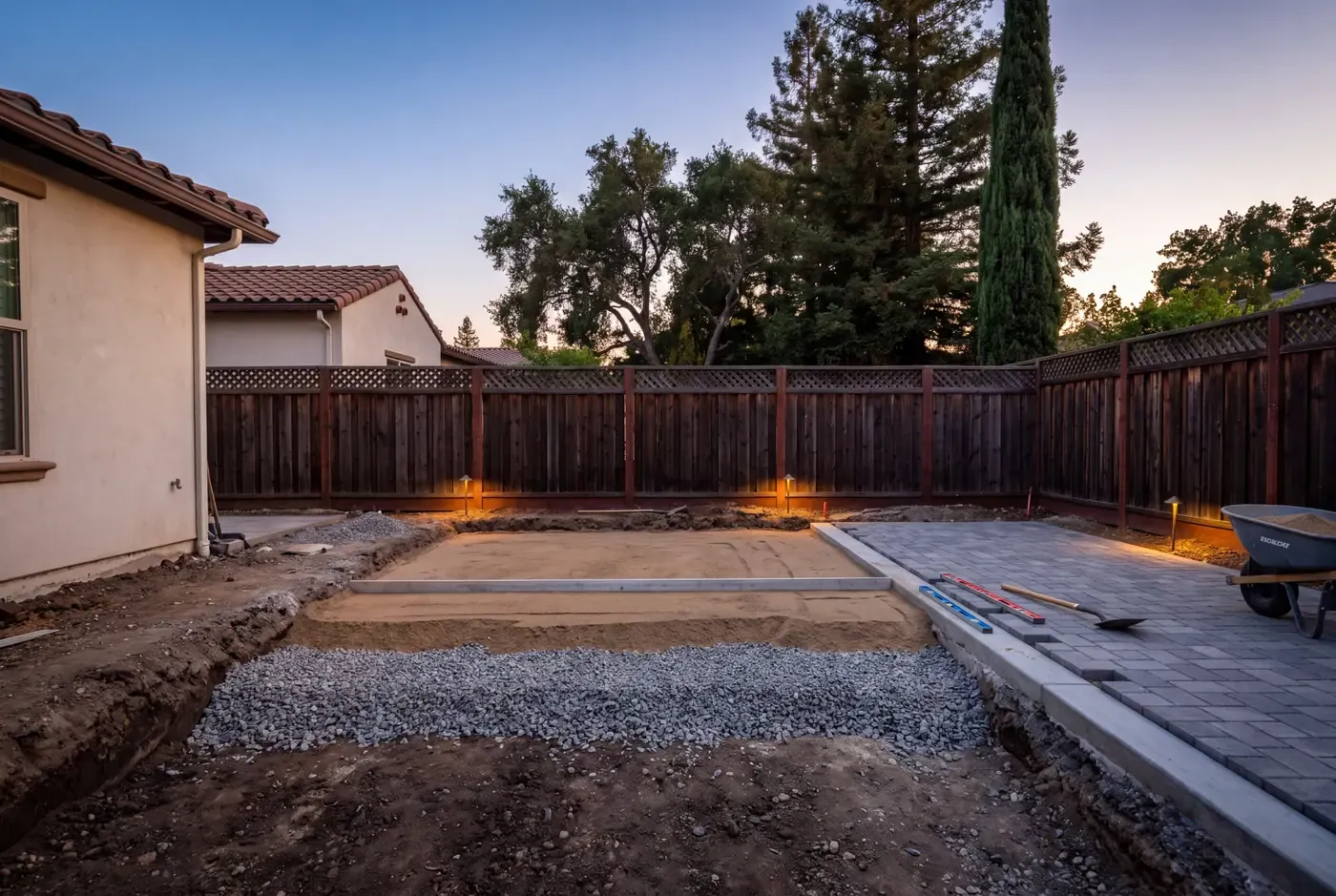
The longevity of any patio comes down to what is underneath. Base preparation follows the same principles regardless of surface material: excavate to the required depth, compact the subgrade, place and compact the aggregate base course, and — for unit pavers — screed a bedding layer.
For a paver patio that will see foot traffic and occasional furniture, the standard base is 4 to 6 inches of compacted Class II aggregate base over compacted native subgrade. For driveways or heavy loads, the depth increases to 8 to 12 inches. Our hardscape team evaluates site conditions before specifying base depth. The base depth is one of the larger cost drivers because it is a volume calculation — deeper base means more excavation, more material, and more compaction passes — but cutting it is the most common reason a new patio fails.
Edge restraint — a concrete curb, galvanised steel edging, or a heavy-duty plastic restraint pinned into the base — holds the paver field together. Without it, the outer pavers drift under traffic and the joints open up.
Poured Concrete: When It Works and When It Does Not
Poured concrete is the most common patio surface in the Bay Area for a reason: on a simple slab it goes in fast, with fewer material and labour steps than setting unit pavers or natural stone. A broom finish is straightforward and provides good traction. Exposed aggregate adds texture and hides stains. Stamped concrete tries to imitate stone, tile, or brick using a single monolithic pour.
The trade-off is cracking. Concrete slabs need expansion joints every 8 to 12 feet — these are intentional weak points where the slab is expected to crack in a controlled line. Even with proper jointing, expansive clay soil can crack slabs unpredictably. Once cracked, concrete repairs are visible: patching leaves a seam, and resurfacing is essentially replacing the top layer, which can delaminate if the original slab moves.
Concrete is appropriate where the subgrade is stable — sandy or loamy soil, or a site that has been over-excavated and backfilled with engineered fill. It is a poor choice over untreated clay unless you accept that cracking will happen.
Concrete Pavers: The Versatile Standard
Concrete pavers dominate residential hardscape because they handle clay soil, can be driven on (at the right base depth), and are repairable. They come in rectangular, square, and interlocking shapes. The interlocking geometry helps distribute load across the field, which is why airports and container terminals use them.
The weak points are staining (concrete is porous and absorbs oil, wine, and barbecue drips) and joint weeds if the sand stabilisation is not done well. A polymeric sand joint — sand blended with a binder that hardens when wetted — resists weed growth and prevents ants from excavating the joints. Sealing pavers every few years reduces staining and makes cleaning easier.
Porcelain Pavers: Dimensional and Durable
Porcelain pavers are fired clay, not concrete. They are dimensionally consistent (no two are different in thickness the way natural stone can be), non-porous, and colour-fast — the colour runs through the full thickness of the paver, so chips do not expose a different material underneath.
They need a properly engineered base with a consistent bedding layer because they are thinner than concrete pavers (typically 20 mm instead of 60 or 80 mm) and will crack if the base settles unevenly. On a correctly prepared base, porcelain pavers outperform concrete on stain resistance and are the best surface for an outdoor kitchen or dining area where wine and oil spills are likely.
Porcelain pavers are also compatible with pedestal systems over existing concrete or waterproofed surfaces, which makes them useful for rooftop decks and terraces.
Natural Stone: Character and Patina
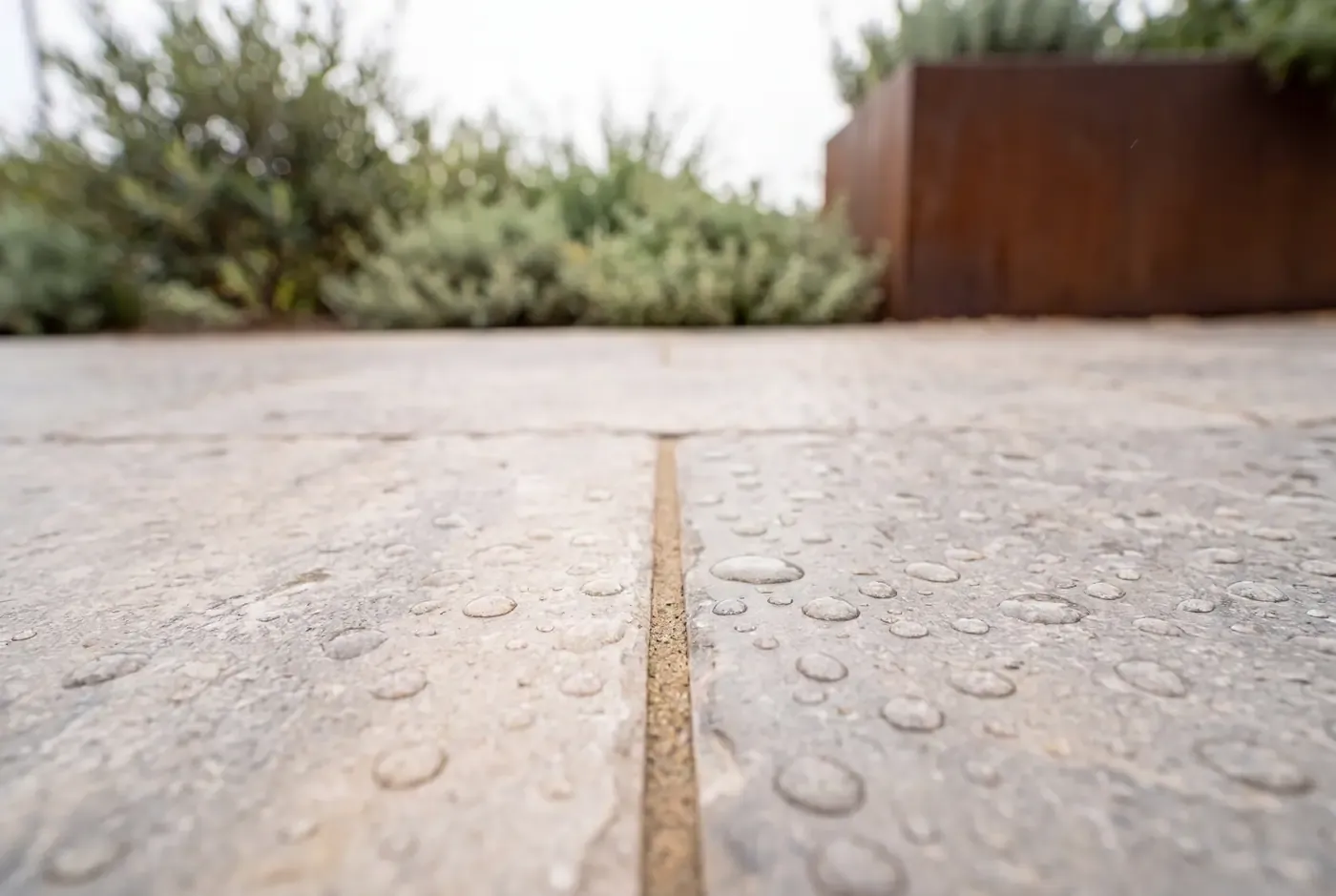
Natural stone — flagstone, bluestone, limestone, travertine, sandstone — offers surface variation that manufactured materials cannot replicate. Each piece is unique. The colour range is broader than any paver line and includes the warm tones that are trending in 2026.
The trade-offs are dimensional variation (stones of different thicknesses require a mortar bed or a thicker sand bed for levelling) and cost. Stone is more expensive than concrete pavers in material and labour. Some stone, particularly softer limestone and sandstone, stains more readily than concrete pavers and may need sealing.
Stone works best where the character justifies the cost: a front entry walkway, a patio where a natural aesthetic matters, or as accent banding within a concrete paver field.
Decomposed Granite and Gravel
For informal areas — pathways through planting beds, a seating nook at the far end of the yard, a dog run — decomposed granite (DG) or clean gravel is a practical option. It drains immediately, does not crack, and can be refreshed by raking. The downsides are that it migrates, needs edging to stay contained, and is not comfortable under dining chairs or barefoot.
DG compacts to a surprisingly firm surface if it is mechanically compacted with a binder, but it will need annual topping up in high-traffic areas.
Matching Material to Use
A patio for a dining table needs a surface that is flat, stable, and easy to clean — porcelain or concrete pavers suit this best. A pool surround needs slip resistance and low surface temperature — exposed aggregate or textured concrete pavers. A good design process helps match material to the specific use case. A garden path benefits from the informal character of natural stone or DG. The wrong material for the use case will be a nuisance every day, so match the surface to how you actually live in the yard.
For homeowners dealing with the clay soils typical of the South Bay, a unit paver system — concrete or porcelain — on a correctly compacted base is the most reliable choice. If you want the look of poured concrete without the cracking risk, large-format concrete pavers laid in a tight pattern (with minimal joint width) achieve a similar appearance with the flexibility of a jointed surface.
Ready to Choose Your Patio Surface?
The right surface depends on your soil, how you use the space, and what you want the patio to look like in a decade. Read about 2026 hardscape trends for more on current material preferences, or explore permeable paving options if drainage is a concern. For a full walkthrough of surface options and base requirements, speak with our team — we build on the soils your yard has, not the ones we wish it had. Contact R&R Backyard Remodeling to start the conversation.