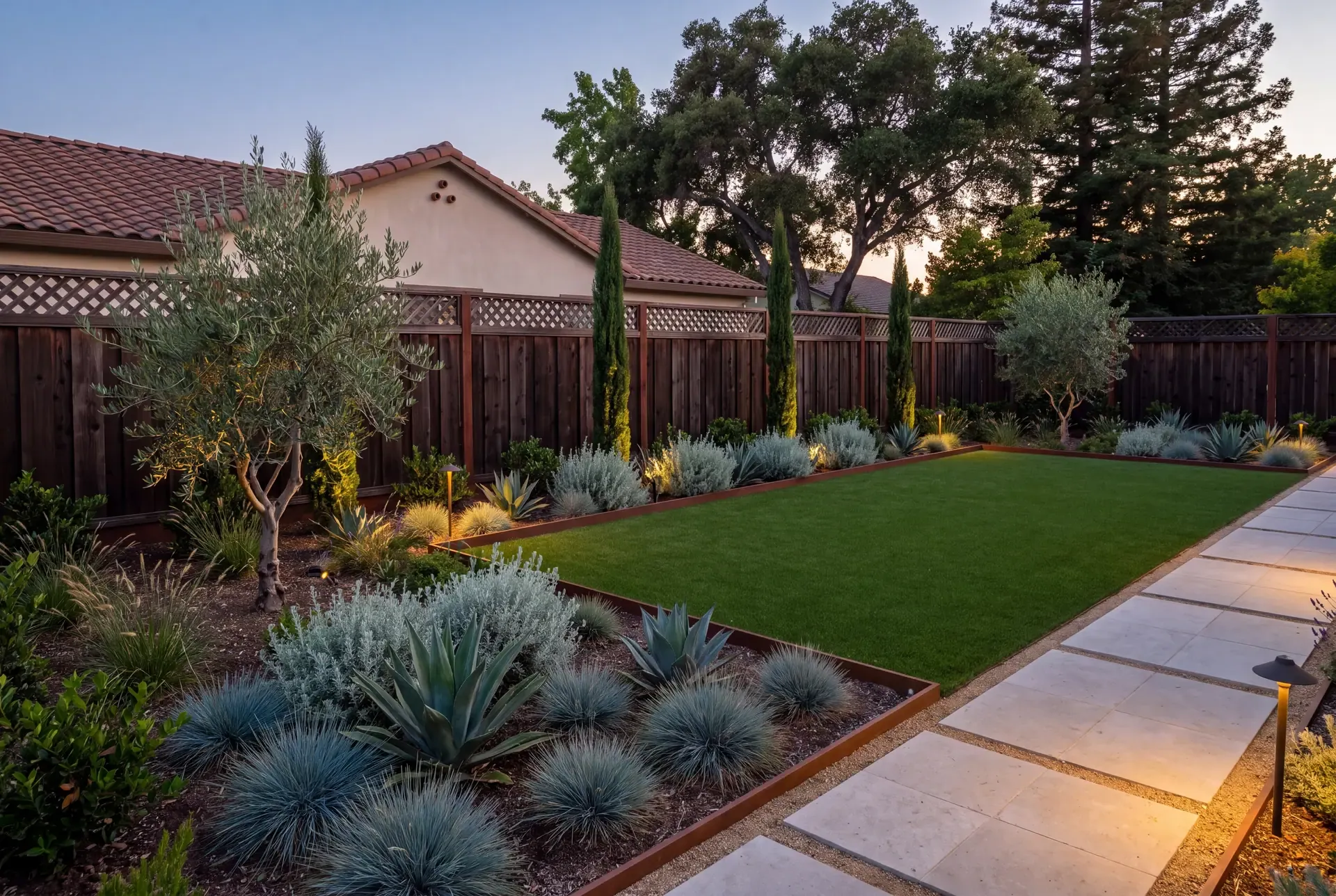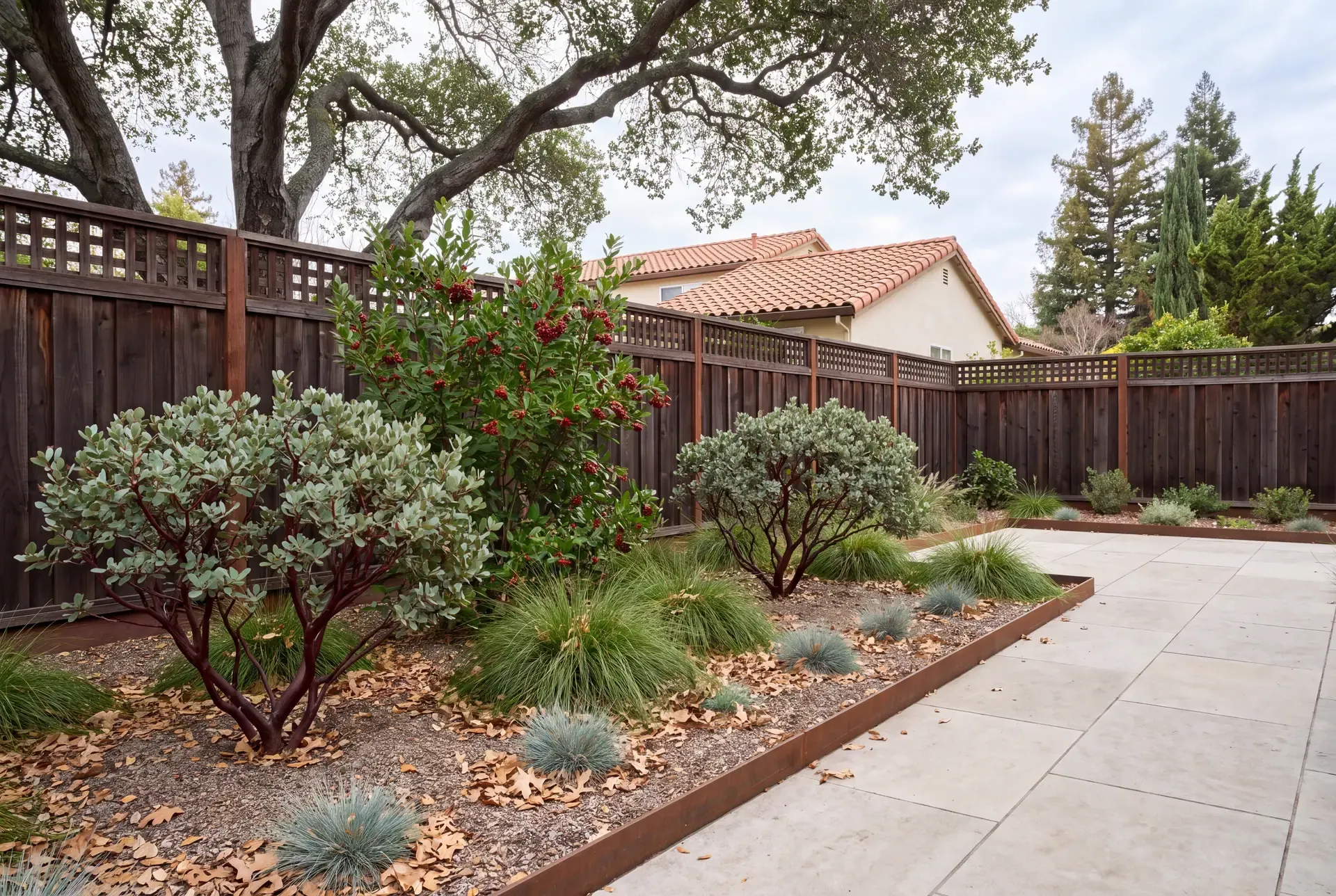
Santa Clara Valley gardens succeed with California natives when the palette fits local realities: hot, rainless summers, mild wet winters, and clay-heavy soils. The plants below are organized by design role, and each is proven in this climate. The catch is watering: most established natives want summer-dry conditions, and overwatering is what kills them.
What the Santa Clara Valley asks of a plant
The South Bay sits in a Mediterranean climate with a twist: the inland valley runs hotter and drier in summer than the coast-facing Peninsula, and winter rain arrives in a handful of big storms rather than steady drizzle. Valley floor soils, from San Jose through Sunnyvale, are often dense clays that hold water for days after a storm and crack in August.
That combination rewards plants with deep roots, drought dormancy strategies, and tolerance for both seasonal saturation and seasonal drought. It punishes plants that need steady summer moisture, and it punishes gardeners who water natives like roses. The species in this list are all drawn from the region's own plant communities — coastal scrub, chaparral, oak woodland, and valley grassland — or from nearby California habitats with matching conditions. Calscape, the California Native Plant Society's plant database, and the UC Master Gardeners of Santa Clara County are the best places to check a plant's range and needs before you buy.
Structure shrubs that anchor the design
These are the evergreen workhorses that give a native garden its shape and winter presence.
- Toyon (Heteromeles arbutifolia). The reliable backbone shrub: evergreen, eight to fifteen feet tall, fragrant white flowers in early summer and bright red berry clusters through winter that mockingbirds, robins, and cedar waxwings strip clean. Handles clay, handles oak understory, asks for almost nothing once established.
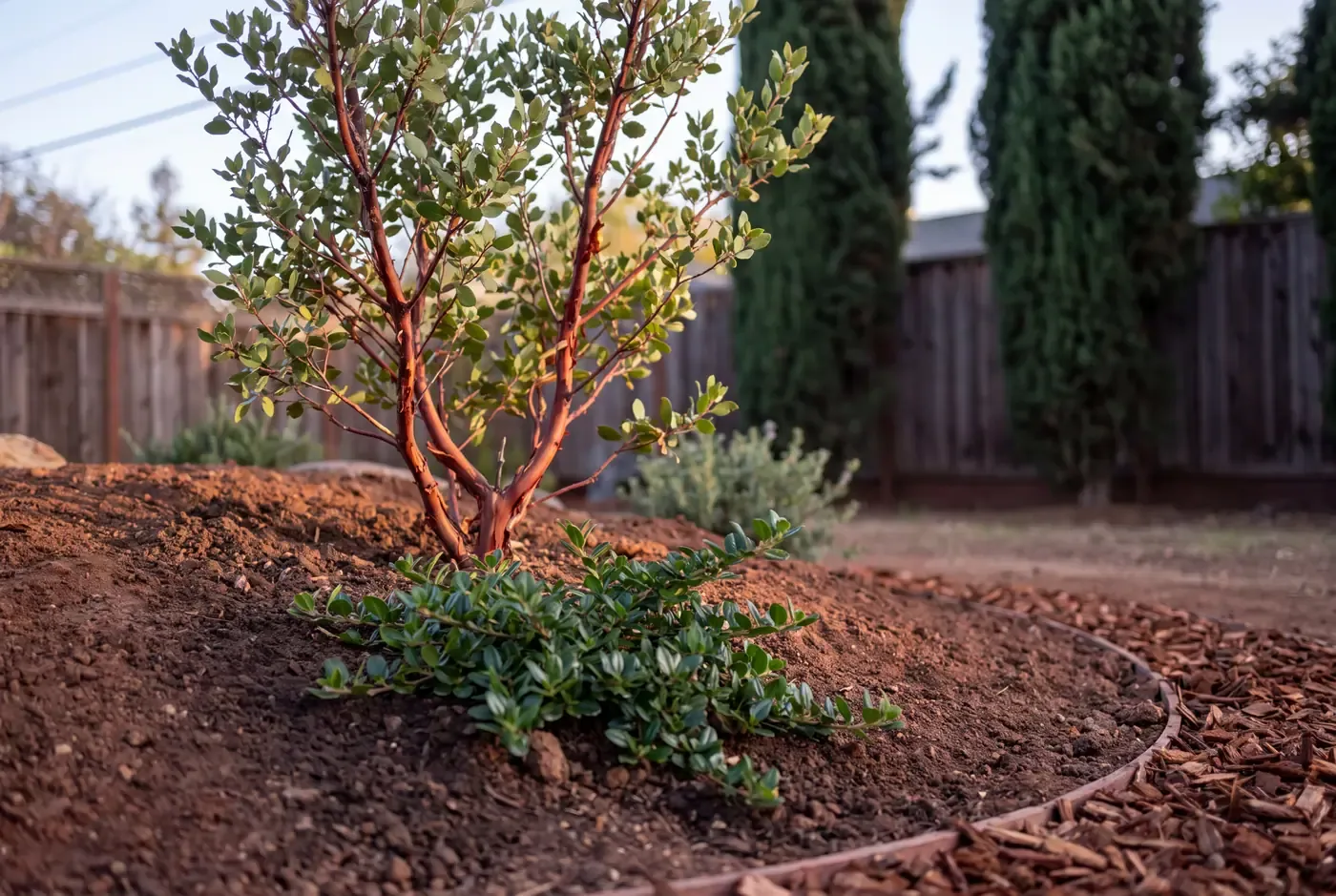
- Manzanita (Arctostaphylos species). Red sculptural bark, pink-white urn flowers in winter, year-round structure. The locally native common manzanita (A. manzanita) belongs in foothill-edge gardens; garden selections chosen for clay tolerance are the safer bet on the valley floor. Manzanitas want excellent drainage — plant them slightly high, on a mound if your soil holds water.
- Ceanothus (Ceanothus species). California lilac. Blueblossom ceanothus (C. thyrsiflorus) and the many garden hybrids bloom blue in spring with a force that stops people mid-sidewalk. Fast, short-lived relative to other shrubs, and strict about summer dryness once established.
- Coyote brush (Baccharis pilularis). An unglamorous genius for slopes and groundcover work: low, spreading, evergreen, nearly fire-resistant, and happy on poor soil with minimal summer water. The prostrate forms knit together into a dense cover that outcompetes weeds.
A toyon-and-coyote-brush framework with a couple of manzanitas gives you a garden that looks intentional in February, when everything else is asleep.
Flowering perennials for long bloom
- Yarrow (Achillea millefolium). Flat white flower heads over ferny foliage from spring into fall, tough in any soil, low moisture needs, and an absolute pollinator magnet. It spreads and reseeds, which is a gift in a meadow-style bed and a nuisance in a formal one.
- Hummingbird sage (Salvia spathacea). The locally native sage of the shaded Santa Cruz Mountain slopes: big aromatic leaves, magenta flower spikes, spreads by rhizome into a fragrant groundcover under oaks and along north-facing fences. It is the answer for dry shade, which most lists ignore.
- Cleveland sage (Salvia clevelandii). A Southern California native that has thoroughly proven itself in Bay Area gardens: gray-green aromatic foliage and whorled purple flowers that perfume a whole yard on a warm afternoon and pull hummingbirds from blocks away. Give it drainage and full sun.
- Naked buckwheat (Eriogonum nudum). One of the most adaptable California buckwheats, with bare stems rising from a leaf rosette to hold clusters of pink-white flowers for months. Buckwheats feed native bees and beneficial insects through the dry season when little else blooms.
Groundcovers and lawn alternatives
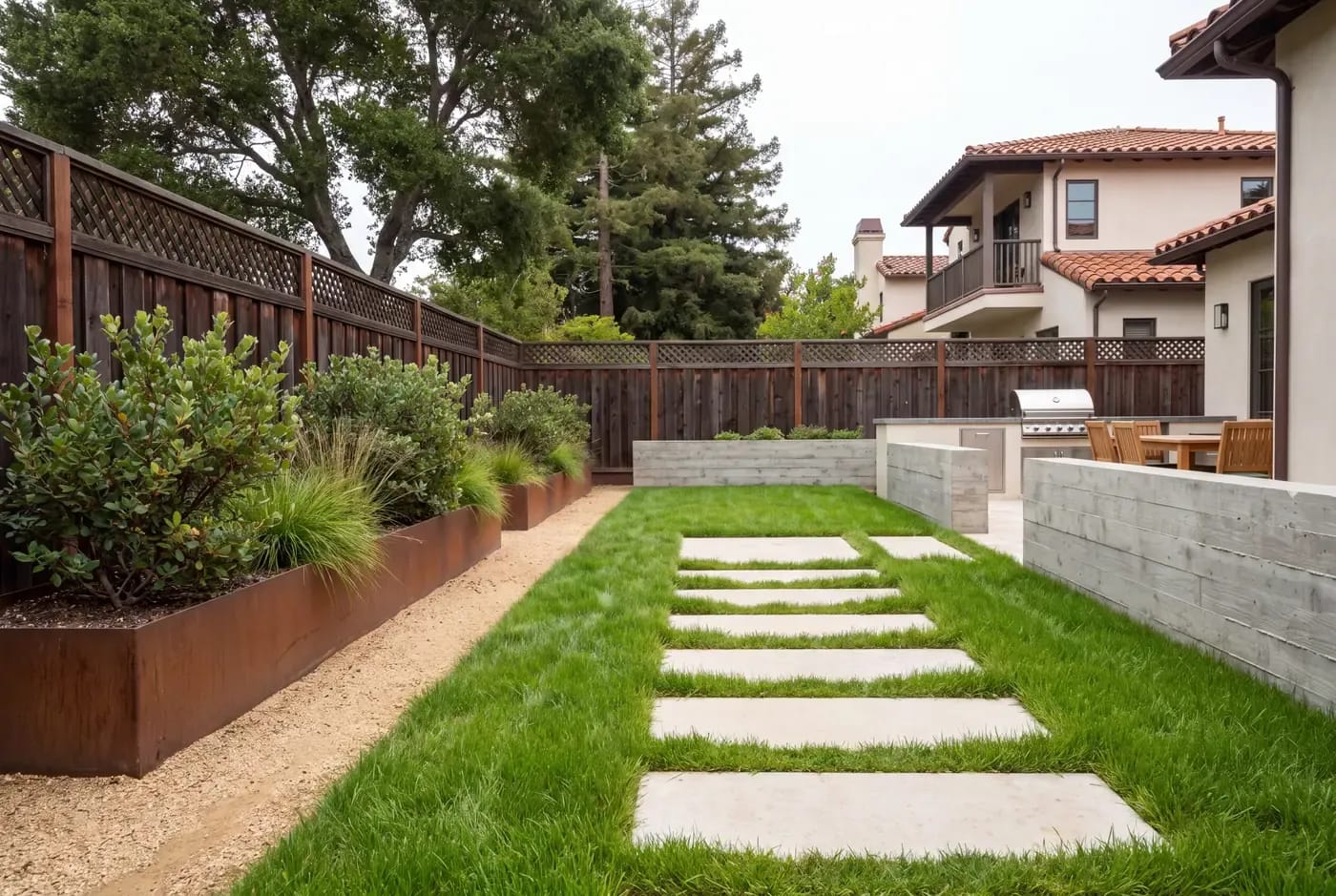
- Clustered field sedge (Carex praegracilis), also sold as meadow sedge. The strongest native lawn substitute for valley conditions. It spreads by rhizome, tolerates clay hardpan, takes mowing or no mowing, and survives moderate foot traffic, including between pavers. It wants more water than the shrubs above but far less than turf.
- Dune sedge (Carex pansa). Often recommended alongside it, but know the difference: dune sedge is a coastal-sand specialist and does its best in sandy soil, not valley clay. On the valley floor, C. praegracilis is the safer sedge.
- Yarrow, mown or left shaggy, works as a low flowering carpet in full sun.
- Coyote brush again, in prostrate form, for areas that need cover but never footsteps.
If you are converting actual lawn and want the rebate pathway along with the planting, our turf replacement rebate guide covers what the local programs require of the finished landscape.
Ornamental grasses: deergrass and friends
Deergrass (Muhlenbergia rigens) is the valley's signature bunchgrass: soft three-to-four-foot mounds of narrow blades with tall golden flower spikes in spring, seeds that feed birds in summer, and a toughness that borders on indifference. Despite the name, deer mostly leave it alone. Plant it in drifts of three or five and it reads as lawn from a distance while using a fraction of the water. Prune or burn it back in late winter and it renews cleanly.
Bunchgrasses are the connective tissue of a native design — they fill gaps between shrubs, stay green or gold through the dry months, and never need mowing, feeding, or fuss. They also shrug off the valley's seasonal extremes: saturated clay in January, baked ground in August, and no irrigation either way once established. Combined with a mowable sedge area for the spots that need footsteps, they give a yard the layered, meadow-like look that reads as intentional rather than abandoned.
Small trees and the keystone oak
If there is room for one tree, make it a coast live oak (Quercus agrifolia). It is the keystone species of this landscape: a single mature oak supports more than 270 species of birds, insects, and other wildlife, lives for centuries, and shades a yard into something genuinely cooler. It handles clay, needs no fertilizer, and mulches itself with its own leaf litter.
The one non-negotiable: protect its root zone from summer irrigation. More valley oaks are lost to loving care than to neglect, and our smart irrigation guide covers how to keep an oak's root crown out of any watering zone. Toyon and manzanita make good understory companions; summer-hungry plants and lawn do not.
For smaller spaces, toyon trained as a small tree, or a multi-stem ceanothus, gives vertical structure without the oak's footprint.
The watering rule that kills most native gardens
Here is the practical heart of the article. California natives evolved with wet winters and bone-dry summers. Established plantings expect to shut down and coast through August on stored reserves. Summer irrigation disrupts that cycle — and near an oak's root crown, warm wet soil in summer invites root disease that can kill a century-old tree in a few seasons.
The correct pattern:
- Establishment. Water new plants deeply and regularly for the first year, tapering through the second. Plant in fall or winter so first-season rains do half the work.
- Tapering. In year two, shift to occasional deep soaks in the driest months, then drop frequency each year.
- Summer dry. By year three, most of the palette above runs on rainfall alone, or one monthly deep drink at most. Sedges and lawn-alternative areas stay on drip, but even they want less than you think.
This is also why irrigation design belongs with plant design, not after it: natives and any remaining thirsty zones need separate valves so tapering one group never drought-stresses the other.
Deer, foothill sites, and getting the design right
In Los Gatos, Almaden, and the foothill towns along the Santa Cruz Mountains, deer pressure is real. Aromatic sages, yarrow, buckwheats, and bunchgrasses are browsed far less than lush new growth; young ceanothus and manzanita often need temporary cages, and beds sited away from fence lines and established deer routes survive better than ones that intercept a commute.
Natives reward a site-specific plan — sun, slope, soil, deer, and the oak you want to protect all change the list. R&R Backyard Remodeling designs and builds native and drought-tolerant landscapes across the South Bay and Peninsula, and because our designers are also our project managers, the plant palette, the grading that keeps clay from drowning it, and the irrigation that tapers it off summer water are all one plan, not three conversations. If you want a planting list tuned to your exact address, a design consultation is where it starts.