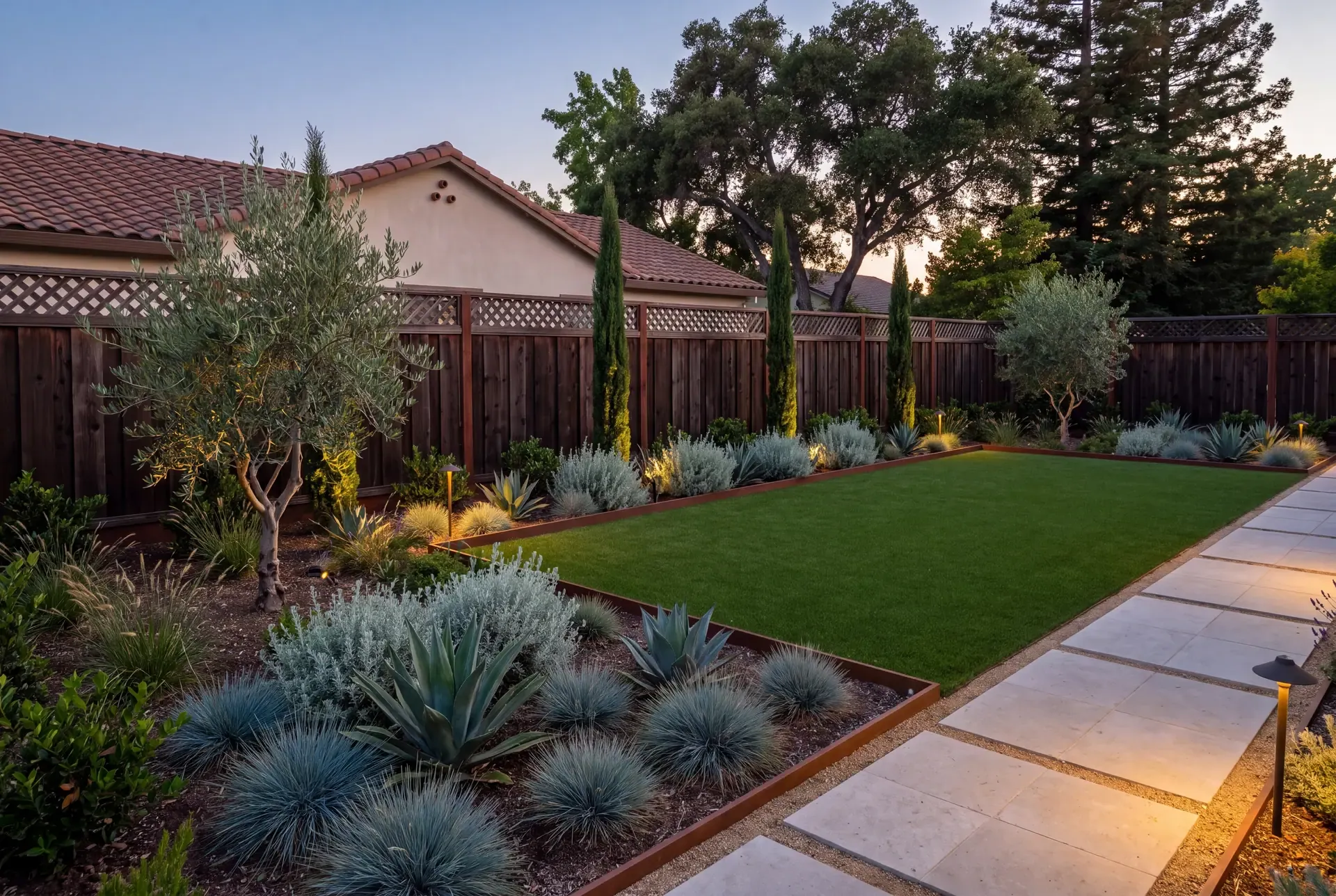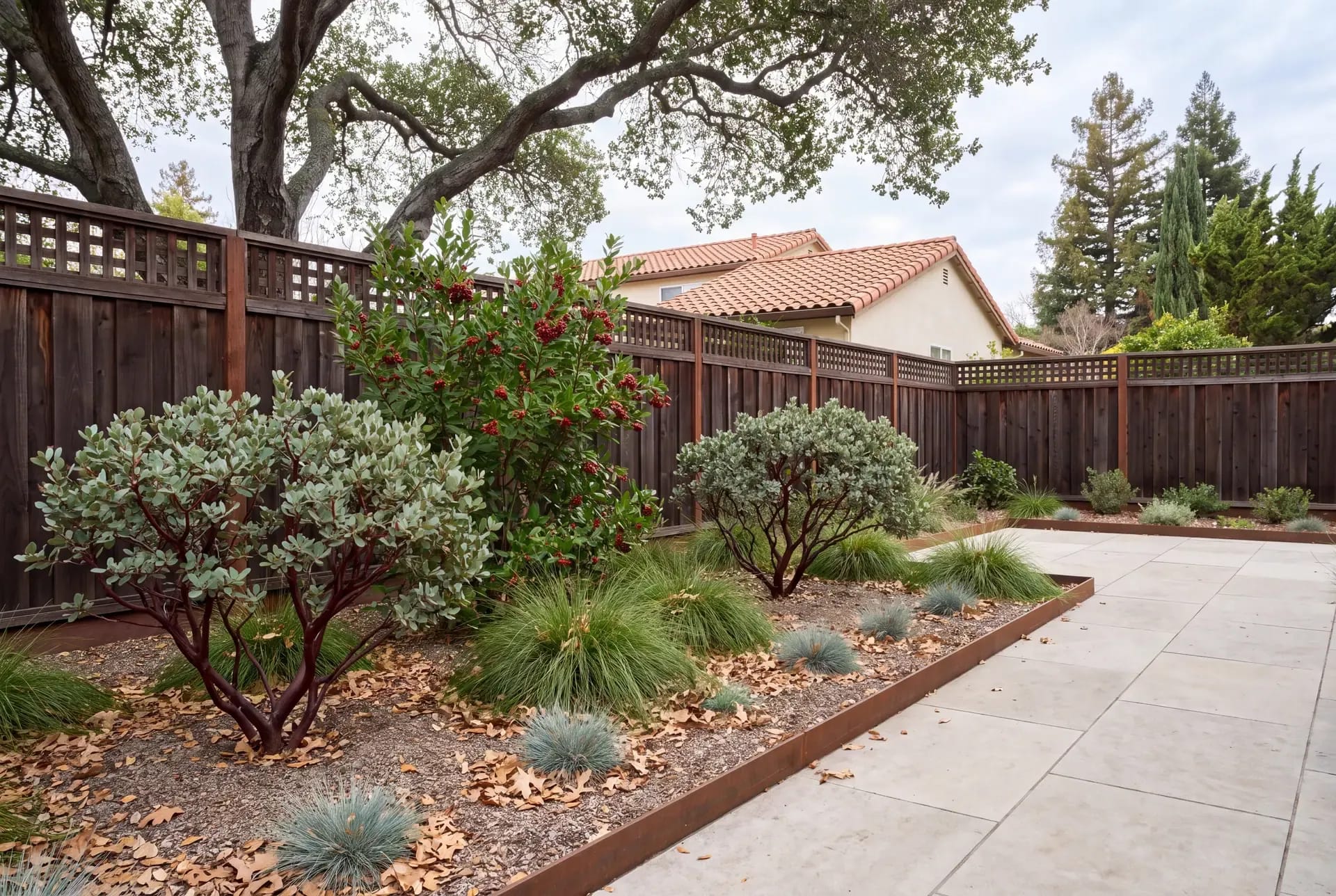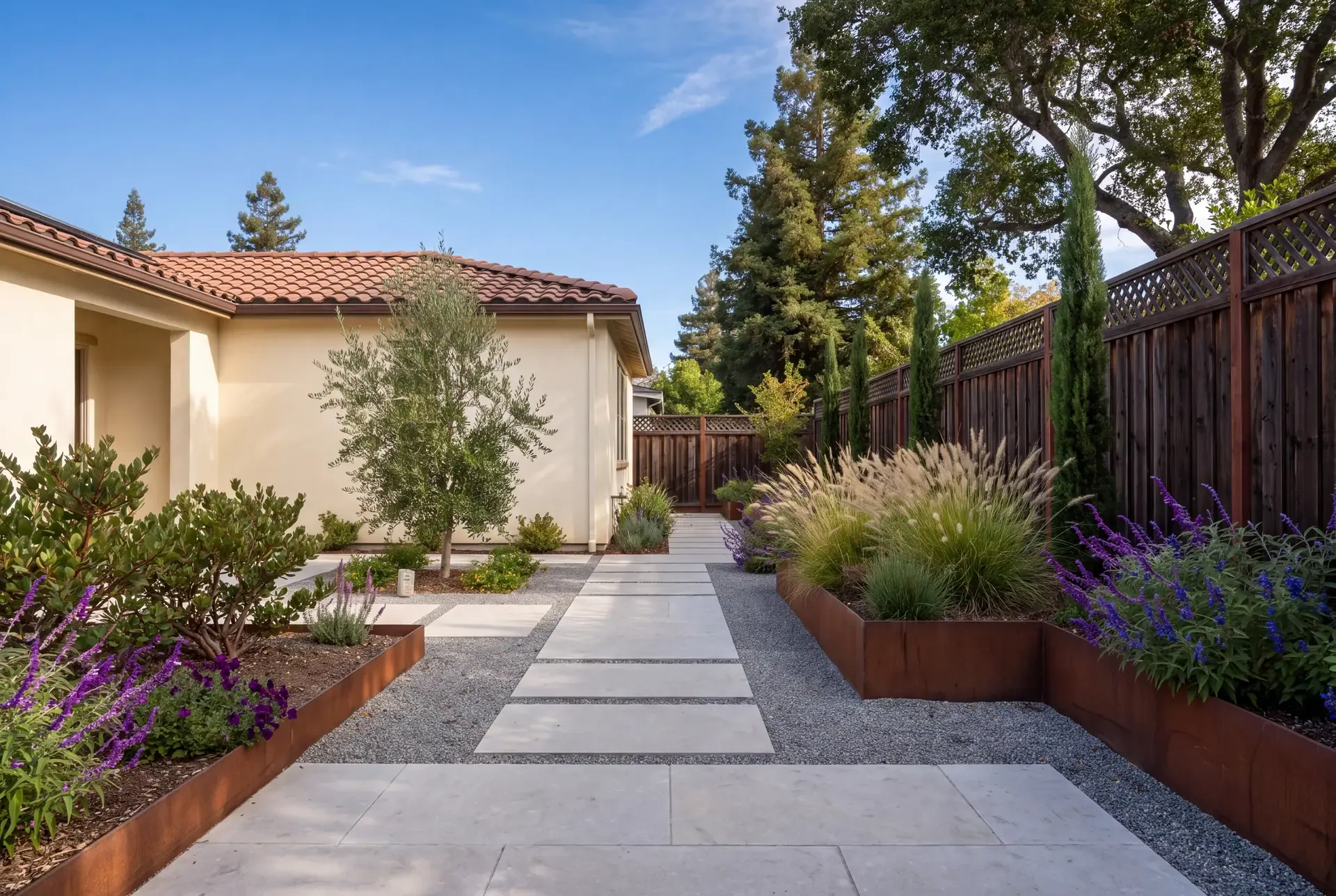
Bay Area lawn replacement rebates run through three programs: BAWSCA's Lawn Be Gone on the Peninsula and parts of the East Bay, Valley Water in Santa Clara County, and EBMUD in the East Bay. Rates vary by agency, but one rule is universal: you must receive written approval before removing any turf. Demolish first and the rebate is gone.
Three programs, one map: who pays where
Your rebate program is set by who bills you for water, not by your street address.
- BAWSCA's Lawn Be Gone! serves customers of participating member agencies of the Bay Area Water Supply and Conservation Agency, mostly on the Peninsula and a few East Bay cities. The program is administered centrally, but each member agency sets its own participation and its own rate, so the offer differs from one city to the next and the roster changes as funding cycles open and close. At the time of writing, published participating agencies included Menlo Park, Redwood City, San Bruno, and several other Peninsula cities.
- Valley Water runs the Landscape Rebate Program for Santa Clara County, covering San Jose, Santa Clara, Sunnyvale, Cupertino, Campbell, Los Gatos, and the rest of the county. This is the program most South Bay homeowners use.
- EBMUD serves the East Bay, from Albany through Oakland and into San Ramon and Walnut Creek, and runs its own lawn conversion rebate with its own tiers.
If you are unsure which agency you fall under, your water bill says so, and both BAWSCA and Valley Water maintain lookup tools. Funding for all three programs is finite. Programs pause when budgets run out and resume when new funding is approved, so confirm current availability with your agency before you design anything.
Pre-approval is not a formality — it is the rule
This is the single most important practical point in this article, so it deserves its own section.
BAWSCA states plainly that to receive the rebate, you must submit an application and receive a notice to proceed from your water provider before removing your lawn. EBMUD uses the same structure: the project may not start until EBMUD provides notice of approval, and they verify it. EBMUD checks that your water use history shows summer irrigation and that historical satellite imagery shows a green, maintained lawn during recent summers. If the satellite record shows a bare yard in July, or your usage never spiked in summer, the project does not qualify.
In practical terms, that means the rebate application is the first task on the project, ahead of design finalization in some cases. The sequence is:
- Confirm the program is open and that your agency participates.
- Apply, with your water account number and before photos.
- Wait for written approval. Take dated photos of the existing lawn from several angles while you wait.
- Only then does any removal happen.
Homeowners who tear out the lawn "to get a head start" routinely lose the entire incentive. A designer or contractor who starts demo before your approval letter is putting your money at risk, whatever they promise.
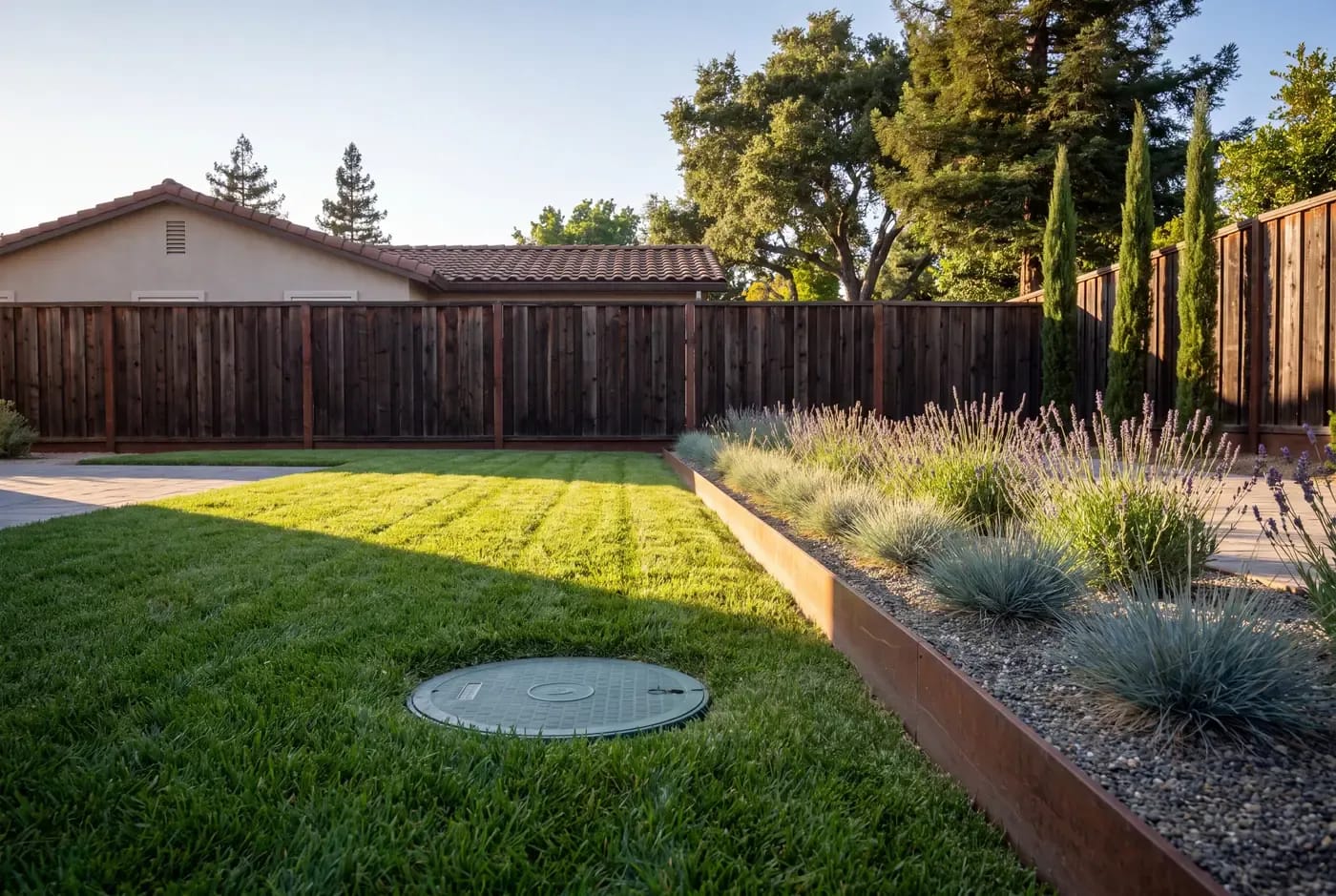
How Lawn Be Gone works, step by step
The mechanics of BAWSCA's program are representative of all three:
- Application. You apply online through the program portal using your water account number. Your agency reviews the application and issues a notice to proceed if you qualify.
- Before documentation. Photos and, in some programs, irrigation records establish that a living, irrigated lawn existed.
- Removal and replacement. The lawn comes out by physical removal or sheet mulching, and the new landscape goes in within the agency's completion window.
- Coverage and materials requirements. The finished yard must meet plant-coverage minimums, keep the site permeable, and convert irrigation away from spray heads. Mulch is required on exposed soil.
- Inspection and payment. You submit after photos and documentation; some agencies inspect on site. Payment arrives after approval of the completed package.
Two details worth knowing. First, Lawn Be Gone offers an optional rain garden add-on for projects that manage rooftop runoff on site, available in most member agencies. Second, the program publishes an approved plant list and resources on sheet mulching, and it publishes a fact sheet explaining why artificial turf does not qualify. If a plant is not on the list, do not assume it counts toward coverage.
What the replacement landscape has to look like
The agencies are not paying for gravel deserts. The programs exist to produce living, permeable, low-water landscapes, and the requirements enforce that:
- Plant coverage. Finished plantings must cover a minimum share of the converted area at maturity. EBMUD requires plants to cover at least half of the converted area once fully grown, and its higher tier asks for a majority of California-native plants.
- Permeability. The site is expected to let rainwater infiltrate. Non-biodegradable weed barriers (plastic sheeting) are disallowed under EBMUD's rules, and impermeable cover can disqualify the project.
- Irrigation conversion. Spray sprinklers must be removed, capped, or converted to drip, with a pressure regulator and filter installed where drip goes in. Plants with different water needs must sit on separate valves.
- Mulch. A three-inch layer over exposed soil is standard across the programs.
- No artificial turf. BAWSCA excludes it, EBMUD prohibits it in rebate conversions, and low-water turf alternatives such as buffalograss are also excluded by EBMUD. This changes the economics for anyone considering synthetic grass, and it is covered in detail in our artificial turf vs. drought-tolerant planting comparison.
Typical disqualifiers, across all three programs: removal before approval, a lawn that was not actually irrigated and maintained, missed completion deadlines, insufficient plant coverage, and documentation that does not match what an inspector sees on site.
Valley Water's program for Santa Clara County
Valley Water's Landscape Rebate Program is the relevant program for R&R's core service area, and it is broader than a simple lawn bounty. It currently has several categories:
- Landscape conversion. Convert high-water-use lawn (or a pool) to a low-water-use landscape.
- Lawn to mulch. A simpler, lower-rate path for commercial, institutional, industrial, and multi-family properties with five or more units.
- In-line drip irrigation conversion. Get paid to convert overhead sprinklers to in-line drip tubing in existing planting beds, even if the lawn stays.
- Irrigation equipment upgrade. Replace inefficient hardware with approved equipment, including weather-based controllers and rain sensors.
- Rainwater capture. Rebates for rain barrels, cisterns, and rain gardens.
The mechanics matter more than any headline rate, which Valley Water revises as funding changes. Sites must complete a pre-inspection and submit an online application for approval before beginning any work, and applications are evaluated in the order received while funds last. As of mid-2026, Valley Water lists current program funding through June 30, 2027, or until depleted. If you are planning a conversion, confirm the current window, rates, and cap on your own account at valleywater.org.
One related law South Bay property owners should know: under state law AB 1572, irrigating nonfunctional, ornamental turf with potable water becomes prohibited on a rolling schedule — public properties and public school districts from January 2027, commercial and industrial properties from January 2028, and HOA common areas from January 2029. The state's nonfunctional turf resource site explains who must comply. Residential backyards are not the target, but the direction of policy is unmistakable.
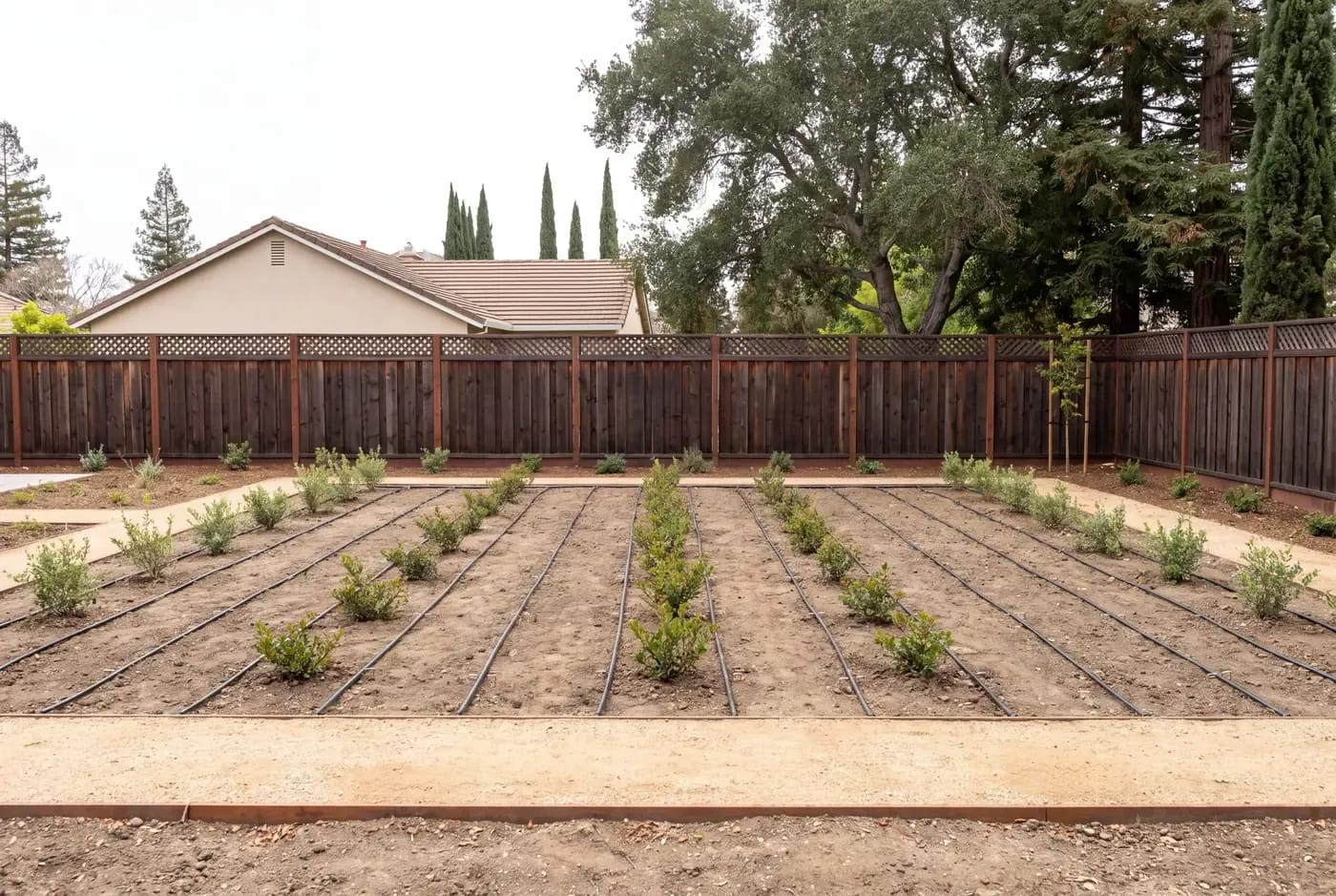
EBMUD's tiers and the commercial deadline
If you are in EBMUD territory, the lawn conversion rebate comes in tiers. The standard conversion asks you to remove lawn, plant low-water-use species, remove or convert sprinklers to drip, and add three inches of mulch. A higher tier pays more if you go further: sheet mulch rather than remove, add compost, use a majority of California-native plants, and plant in the cool season from September through February. There is also a commercial-only incentive for irrigated lawn median strips, which are nearly impossible to water efficiently. Commercial, municipal, and large multi-family properties have their own, higher rebate cap.
The eligibility bar is worth noting because it is stricter than most people expect: the lawn must have been irrigated with potable EBMUD water and actively mowed for at least the previous three years, and EBMUD confirms that with usage data and satellite imagery. Once approved, you have nine months to complete the project and submit documentation.
This tier structure is a useful preview of how the programs are evolving: the best support goes to conversions that follow ecological best practices — sheet mulching, compost, native plants, cool-season planting — rather than the fastest, cheapest lawn-to-gravel flip.
Plan the rebate into the design, not after it
The cleanest rebate projects are designed with the program requirements in hand: coverage percentages, approved plant lists, drip conversion details, and documentation needs all shape the plan before it is drawn. Doing it in reverse — building the yard, then hoping it qualifies — is how approvals fail.
Because the replacement landscape, the irrigation conversion, and any paving that replaces part of the lawn are one construction project, it helps to have a single team coordinate the application paperwork with the design. R&R Backyard Remodeling handles landscape and hardscape conversions as design-build work, which means the plant list, the irrigation plan, and the permeability details your agency will inspect are settled on paper before anyone picks up a shovel. If you want a conversion that qualifies, start with a consultation and bring your water account number.
If your project is large enough to trigger a permit, California's landscape water budget rules may apply on top of the rebate rules — see MWELO explained for how those two systems interact.