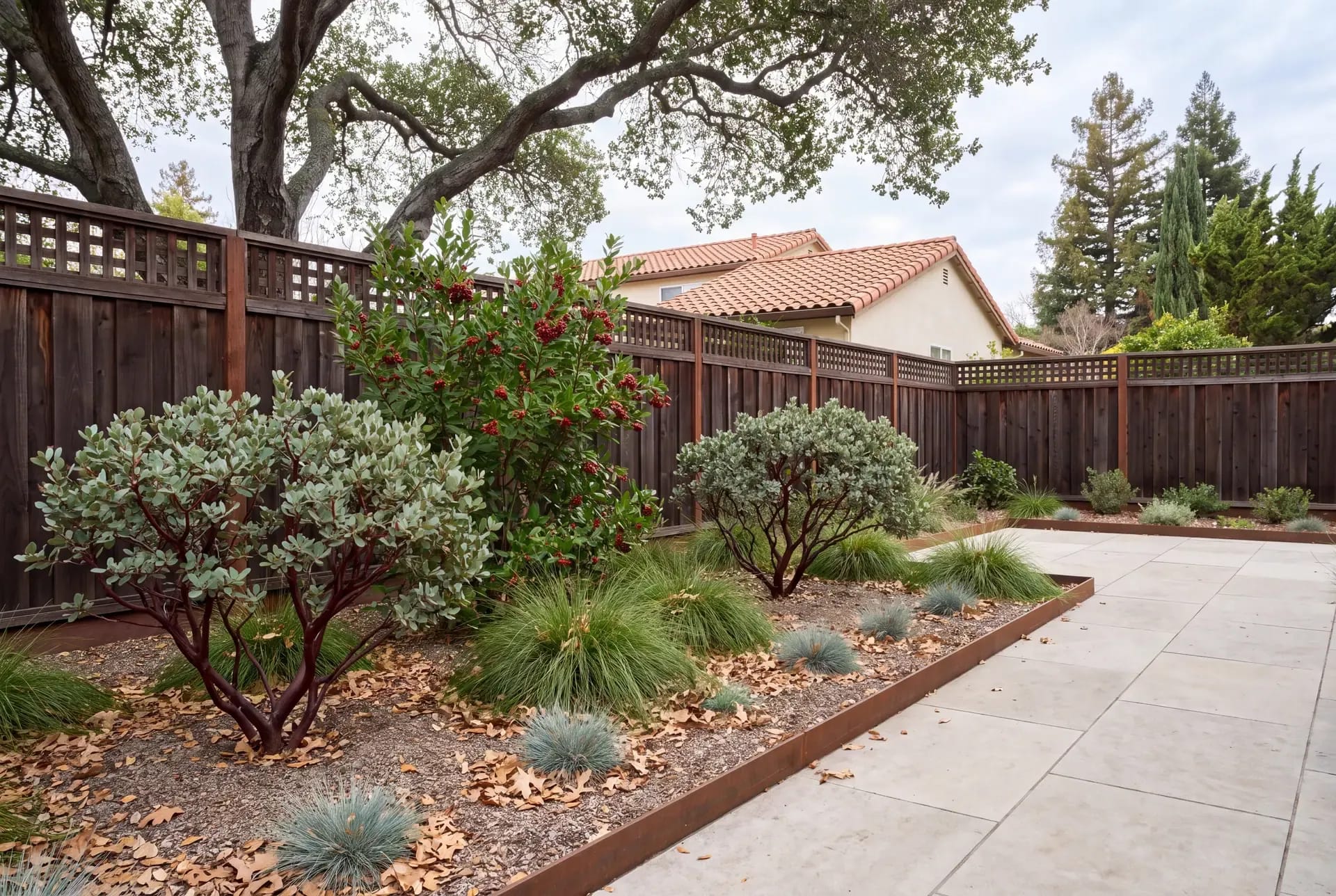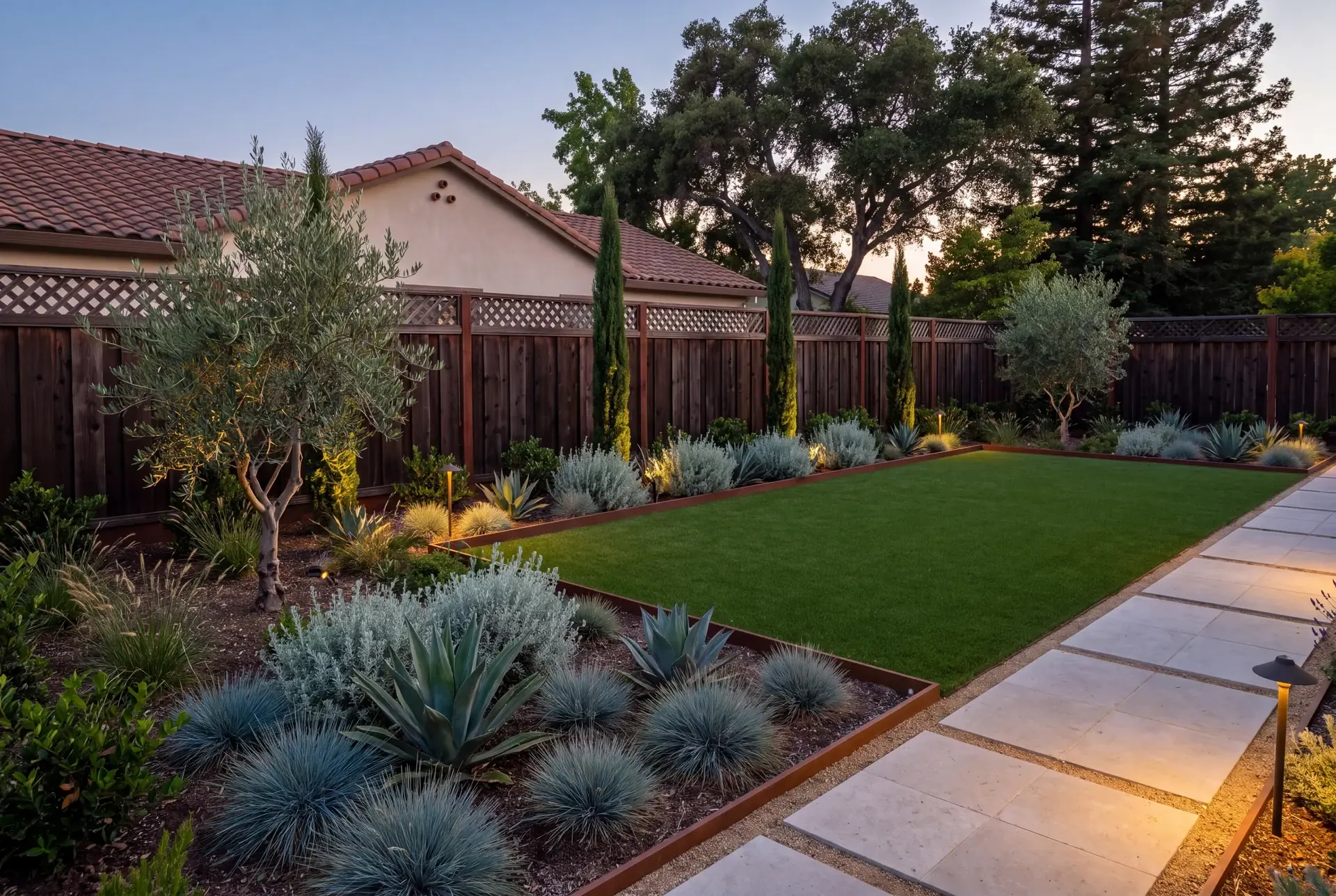
Both end the lawn-watering era, and we install both. But they are genuinely different choices. Artificial turf wins on instant, mud-free durability under heavy foot traffic. Drought-tolerant planting wins on summer heat, habitat, long-term appearance, and rebate eligibility. The right answer depends on the spot you are converting, and often the best yard uses a bit of both.
Water: both save, neither is zero
Start with what they share: either option eliminates lawn irrigation, which is the largest outdoor water use in most Bay Area homes.
A well-designed drought-tolerant landscape still uses some water: establishment irrigation for the first year or two, then occasional summer water for a subset of plants, tapering toward near-zero for many natives. Drip delivery keeps that volume small.
Artificial turf is marketed as water-free and is not. It needs periodic rinsing for sanitation, especially where pets use it, and on hot inland afternoons some owners hose it down to cool the surface enough to walk on. The volume is far below a lawn, but the "zero water" claim does not survive contact with a July afternoon in San Jose.
Heat: the issue synthetic grass cannot solve
This is where the comparison stops being close, and we would be doing you a disservice to soften it.
In direct sun, artificial turf surfaces reach temperatures far above the surrounding air and dramatically above living plants. Living vegetation cools itself and its surroundings through transpiration; plastic cannot. [BAWSCA's own fact sheet](https://bawsca.org/uploads/userfiles/files/Artificial%20Turf%20Fact%20Sheet(2).pdf) on artificial turf lists this plainly: synthetic turf can get significantly hotter than surrounding air temperatures, contributing to the heat island effect by raising air temperatures in urban settings. In the inland South Bay, where summer afternoons run hot and backyards face long sun exposure, that means a synthetic yard can become the hottest surface on the property and warm the air around it.
Drought-tolerant planting does the opposite. Shade from small trees, evapotranspiration from leaves, and mulched soil all run cooler than pavement or plastic. If your yard is a sitting yard, a kids' yard, or a dog yard used in summer afternoons, surface temperature is not a footnote. It decides whether the space is usable at 4 p.m. in August.
Underfoot: drainage, infill, microplastics, and end of life
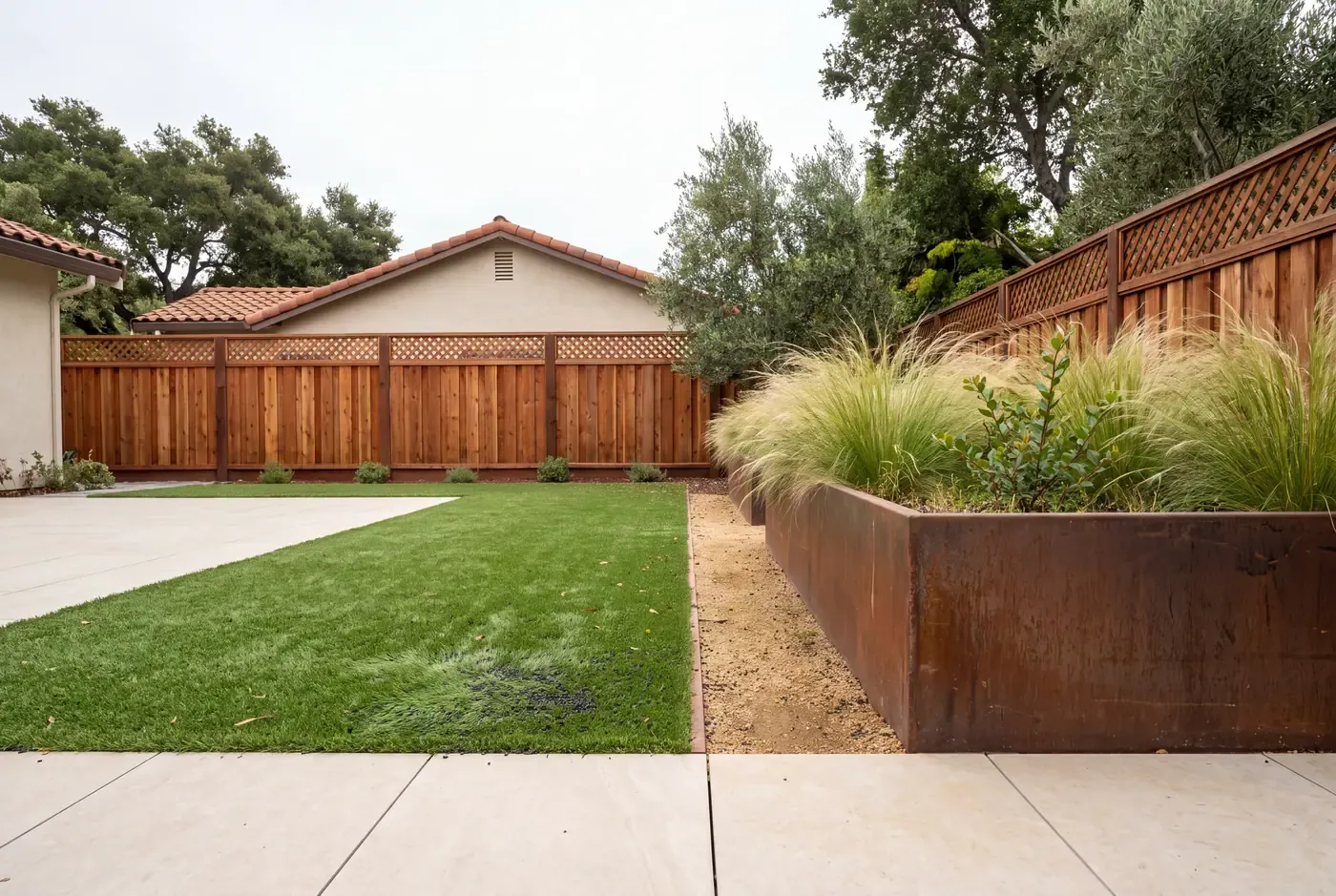
Artificial turf is a manufactured product with a manufactured lifecycle, and each stage carries tradeoffs a living landscape does not have:
- Infill. Most installations use crumb rubber or silica sand infill to hold blades upright and cushion footsteps. It migrates, it tracks indoors, and it needs topping up over time.
- Drainage. Water passes through the perforated backing into an engineered gravel base. Done well, it drains faster than Bay Area clay ever will. Done poorly, or once the base clogs with fines, it ponds. A living landscape on properly graded, amended soil infiltrates rainfall and recharges groundwater on site.
- Microplastics and runoff. The plastic blades degrade slowly under UV exposure, and BAWSCA notes that runoff from artificial turf may carry pollutants, including heavy metals and chemicals, toward surface and groundwater, with research ongoing.
- End of life. Synthetic turf has a finite lifespan, roughly ten to twenty years by BAWSCA's account, after which it comes out and, in most cases, heads to a landfill. A living landscape is renewed piecemeal, plant by plant, indefinitely.
None of this makes artificial turf an environmental crime. It makes it a consumable product rather than an ecosystem, which is a fair thing to know before you buy.
Habitat, soil, and the pet question
A planted yard is a working habitat. California natives in particular feed and shelter pollinators, birds, and beneficial insects, and they build soil biology over time. A synthetic yard supports none of that: no flowers, no soil microbes, no insects, no birds foraging. If habitat value matters to you, there is no contest, and our native plants guide for the Santa Clara Valley covers species that earn their keep.
Pets cut both ways. Dogs urinating on artificial turf creates odor that builds without regular rinsing and enzyme treatments, and infill can hold smell in warm weather. On the other hand, a synthetic patch survives a dog's traffic in a way no planting bed does, with no mud tracked into the house, no worn-out bare paths, no dug-up shrubs. For a dedicated dog run, that durability is real value.
Maintenance is lower, not zero, and lifespan is finite
Artificial turf's maintenance story is genuinely good, and honest comparison requires saying so. No mowing, no fertilizing, no reseeding bare spots. What it does need:
- Brushing or power-brooming to keep blades standing and infill even.
- Leaf and debris removal, which is harder than it sounds on turf.
- Weeding along edges and seams, where wind-blown soil accumulates and seeds root.
- Infill top-ups as material migrates and compacts.
- Rinsing for sanitation and, in summer, for cooling.
A drought-tolerant landscape needs different work: seasonal pruning, a few rounds of weeding until plantings close in, mulch refresh every few years, and irrigation system checks. More horticultural skill, less repetition. Most owners we talk to underestimate the synthetic upkeep and overestimate the planted upkeep, so plan on meeting somewhere in the middle.
The other finite thing is appearance. Artificial turf looks its best on day one and slowly fades and flattens until replacement. A planted landscape looks thin on day one and improves for years as plants mature, provided it was designed for the site and watered correctly during establishment.
Rebates: the fact that changes the decision
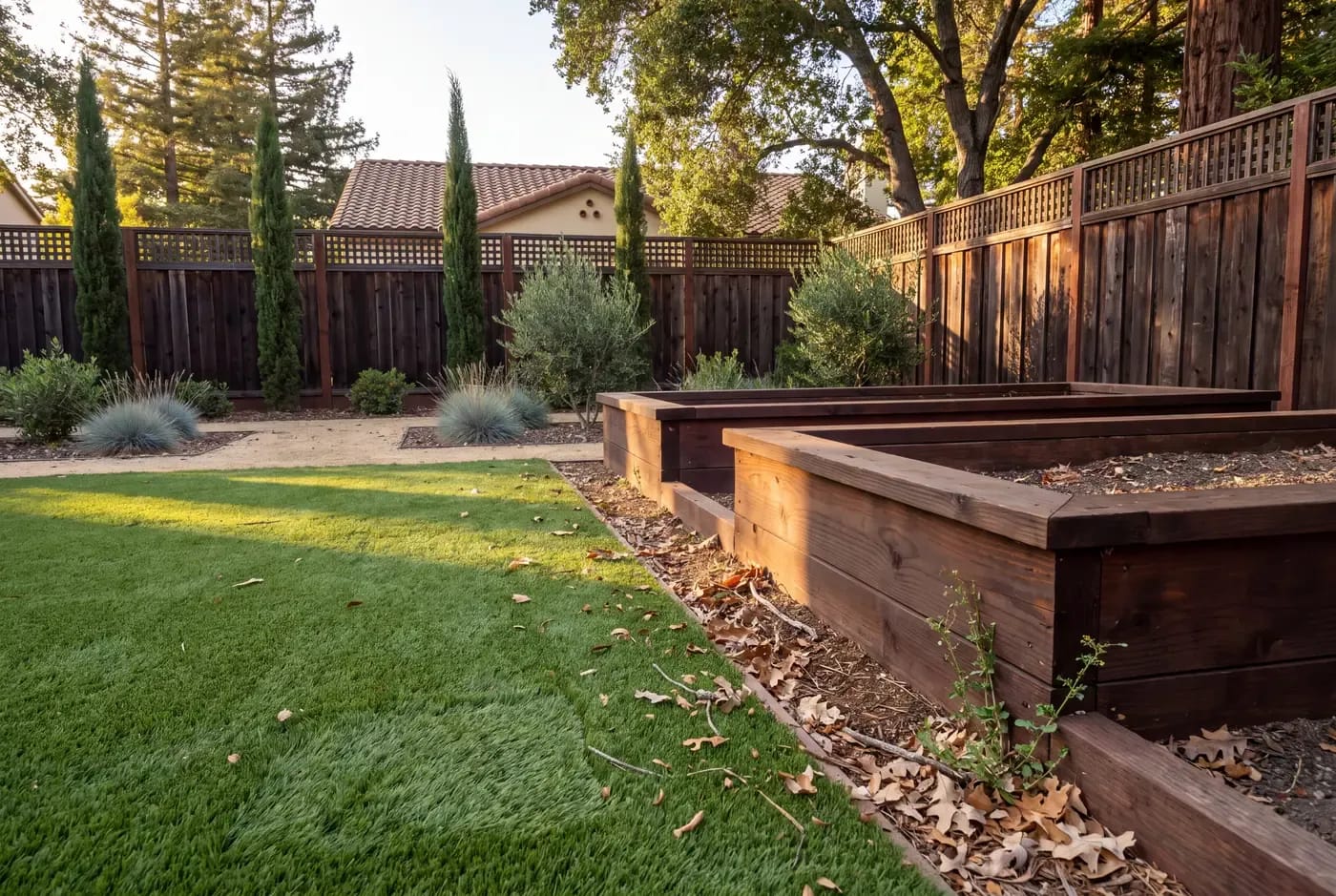
For many Bay Area homeowners, this is the deciding point, so here it is plainly: artificial turf is not eligible under most local turf replacement programs.
- BAWSCA's Lawn Be Gone program explicitly excludes artificial turf and publishes a fact sheet explaining why: no habitat, no cooling, no carbon uptake, not water-free, finite landfill-bound lifespan.
- EBMUD prohibits artificial turf in its lawn conversion rebate projects, and also excludes low-water turfgrass alternatives.
- Valley Water's conversion rebates are structured around low-water-use living landscapes with approved plant lists.
Rates and program status change, so confirm the current rules with your own agency. Our guide to Bay Area turf replacement rebates walks through how each program works. But if you were planning synthetic turf partly because you assumed it qualified for a rebate, reverse that assumption before you buy. A drought-tolerant conversion can come with incentive money; a synthetic one almost never does.
Side-by-side comparison
Consideration | Artificial turf | Drought-tolerant planting |
|---|---|---|
Irrigation water | None for growth; periodic rinsing and cooling | Low; establishment water, then occasional summer drip |
Surface temperature in direct sun | Very hot; well above air temperature | Near air temperature; cools surroundings |
Heat island effect | Contributes to it | Mitigates it |
Drainage | Engineered base; excellent if built well | Infiltrates on site when graded and amended right |
Microplastics and runoff | Plastic wear and infill; runoff concerns under study | None |
End of life | Landfill after roughly ten to twenty years | Renewed piecemeal, indefinitely |
Habitat and pollinator value | None | High, especially with California natives |
Pets | Durable; odor needs active management | Softer underfoot; beds get dug and worn |
Maintenance | Low but real: brushing, infill, edge weeding, rinsing | Seasonal pruning, weeding, mulch, irrigation checks |
Appearance over time | Fades and flattens from day one | Fills in and matures for years |
Rebate eligibility | Excluded by BAWSCA and EBMUD; incompatible with Valley Water's plant-based rules | Eligible under BAWSCA, Valley Water, and EBMUD programs |
Bay Area winter rain | Drains through base if uncompromised | Handles rain well on clay with proper grading |
Where each one genuinely fits
Artificial turf earns its place in specific spots: a small, heavily used play patch, a compact dog run, or a deep-shade strip between houses where nothing else survives and mud is the only alternative. In those cases it is genuinely the better tool, and we install it without hesitation.
For everything else, from front yards and sitting areas to larger sunny spaces and anything you want cooler in summer and rebate-eligible, drought-tolerant planting is the stronger choice, and on clay-heavy valley soils the design details around grading and drainage matter more than the plant list.
R&R Backyard Remodeling builds both, and we build mixed yards where a synthetic play patch sits inside a planted landscape. If you are weighing the two for a specific area, a landscape consultation is the fastest way to settle it, and if the conversion replaces lawn with paving as well as planting, our hardscape team handles both sides of that line at once.