California's Board of Forestry and Fire Protection is drafting a regulation that would create a new defensible-space requirement: Zone 0, the 0-to-5-foot ember-resistant zone immediately surrounding a structure. As of mid-2026, this rule is a draft — not yet an enforced statewide mandate — but it is far enough along that Bay Area homeowners in fire-prone areas should understand what it proposes and start planning yards accordingly.
What Zone 0 Is, and What It Is Not
Zone 0 is the innermost ring of the defensible-space framework. The existing Zone 1 (5 to 30 feet) and Zone 2 (30 to 100 feet) focus on reducing fuel continuity and managing vegetation density. Zone 0 adds a stricter layer for the 5 feet closest to the structure — the area where wind-driven embers are most likely to land in combustible material and ignite the building from the ground up.
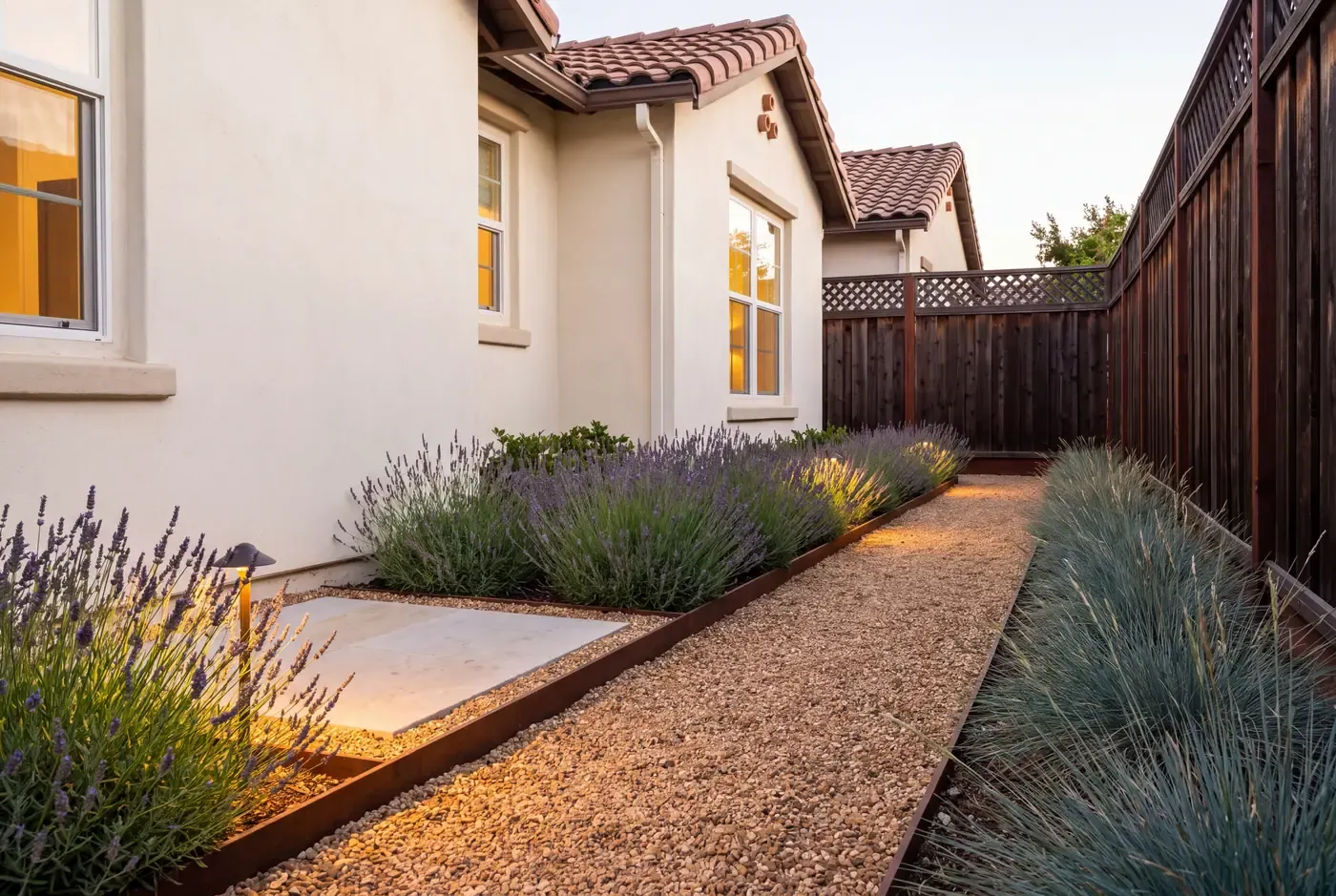
The draft regulation, being developed by the Board of Forestry and Fire Protection, is expected to prohibit:
- Combustible mulch — bark, wood chips, and shredded rubber within 5 feet of the structure
- Dead or dry vegetation — any plant material that could ignite from an ember
- Combustible storage — firewood, lumber, and similar materials against or near the house
- Wood fencing attached directly to the structure without a noncombustible section at the connection point
- Most woody shrubs and trees within the 5-foot band
What would be permitted under the expected rule: noncombustible ground treatments — gravel, crushed stone, concrete, pavers, and bare soil — plus limited, well-irrigated herbaceous groundcovers kept free of dead material. The rule as drafted gives local fire agencies flexibility to approve alternative treatments that achieve the same ember-resistance outcome, recognizing that a one-size approach does not fit every site.
Why Zone 0 Matters Locally
The Bay Area's fire risk is not evenly distributed. Los Gatos, the Santa Cruz Mountains foothills, the East Bay hills (including parts of Fremont and Milpitas), and the wildland edges of unincorporated Santa Clara County all sit within mapped high or very high fire hazard severity zones. If your property falls within one of these zones — you can check on the CAL FIRE Fire Hazard Severity Zone map — Zone 0 will almost certainly apply to you once the regulation is finalized.
Even if your property is not in a mapped high-hazard zone, the physics of ember ignition does not respect map boundaries. During the 2020 CZU Lightning Complex and SCU Lightning Complex fires, embers traveled well beyond mapped hazard boundaries and ignited structures through combustible materials immediately adjacent to walls. Zone 0 is designed to address exactly that mechanism.
The Board's Phased Rollout Plan
The Board of Forestry has indicated that Zone 0 will roll out in phases, with an initial period focused on education and voluntary compliance rather than immediate enforcement. Local fire agencies — your county fire department, a fire protection district, or a municipal fire department — will be responsible for implementation, and many already include Zone 0 concepts in their existing defensible-space inspection programs.
This phased approach means homeowners have time to plan their Zone 0 transition as part of a larger landscape renovation, rather than ripping out plantings on an emergency timeline. If you are already planning a backyard remodel, incorporating Zone 0-compliant materials now avoids a second-round retrofit later.
What Zone 0 Means for Backyard Design
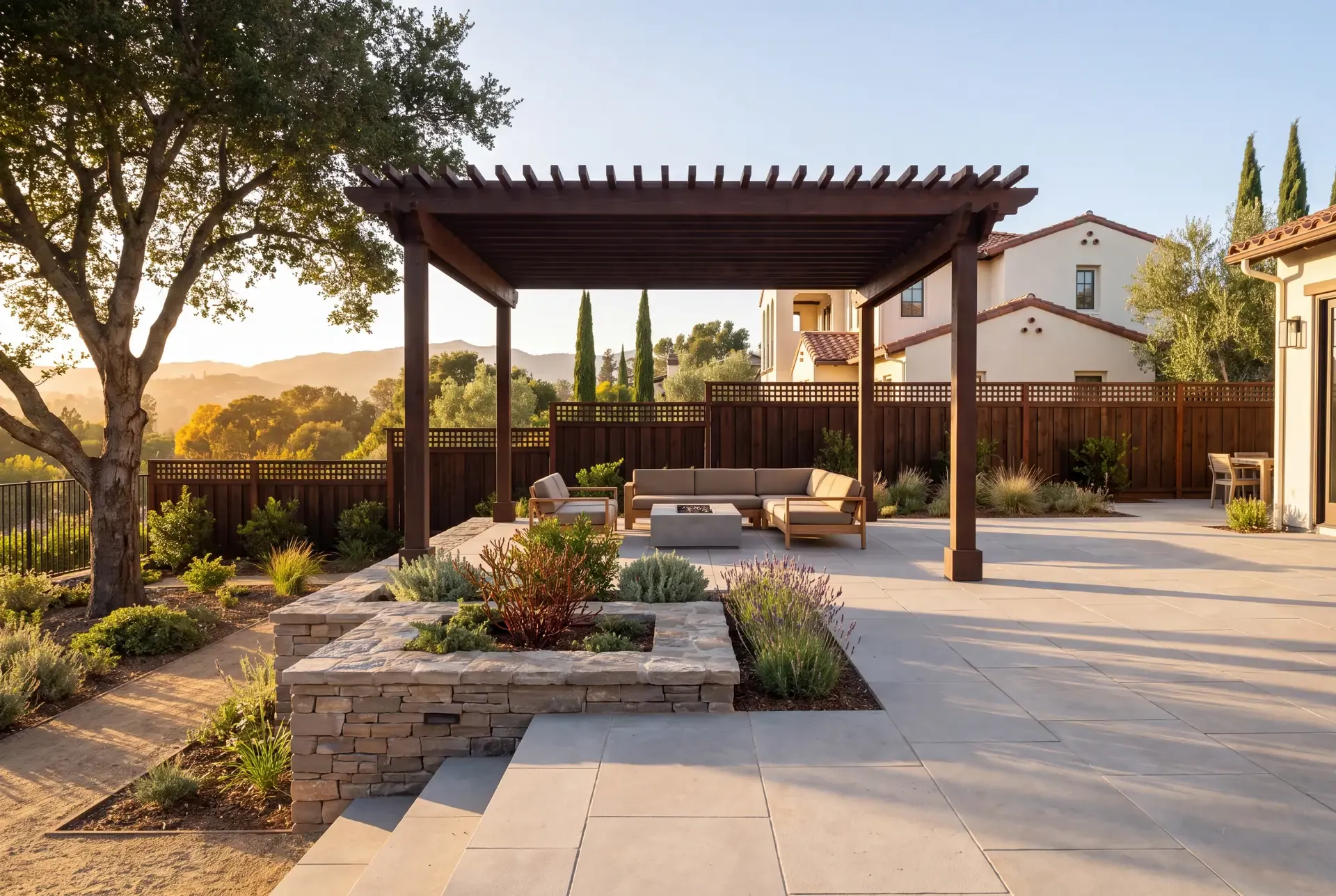
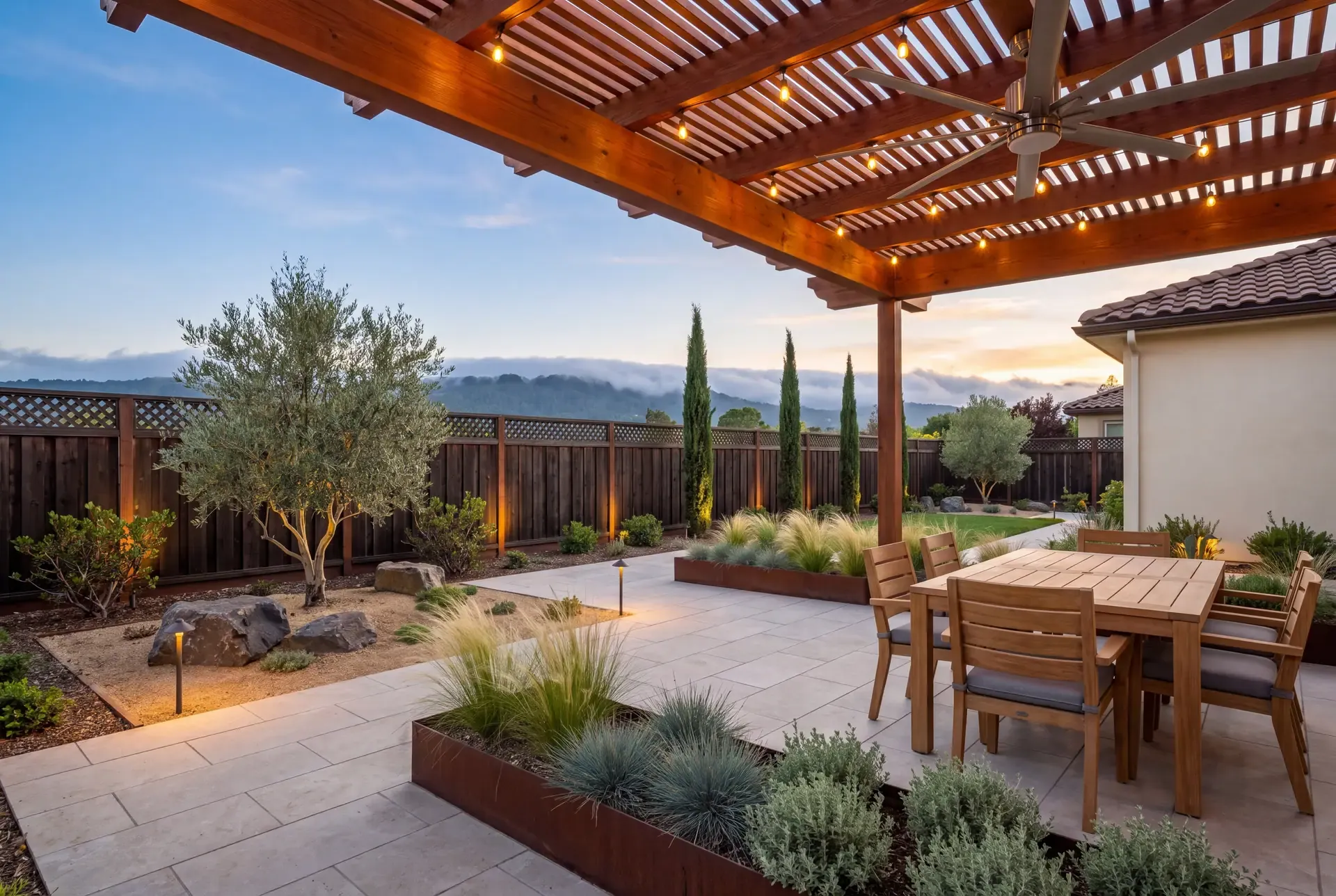
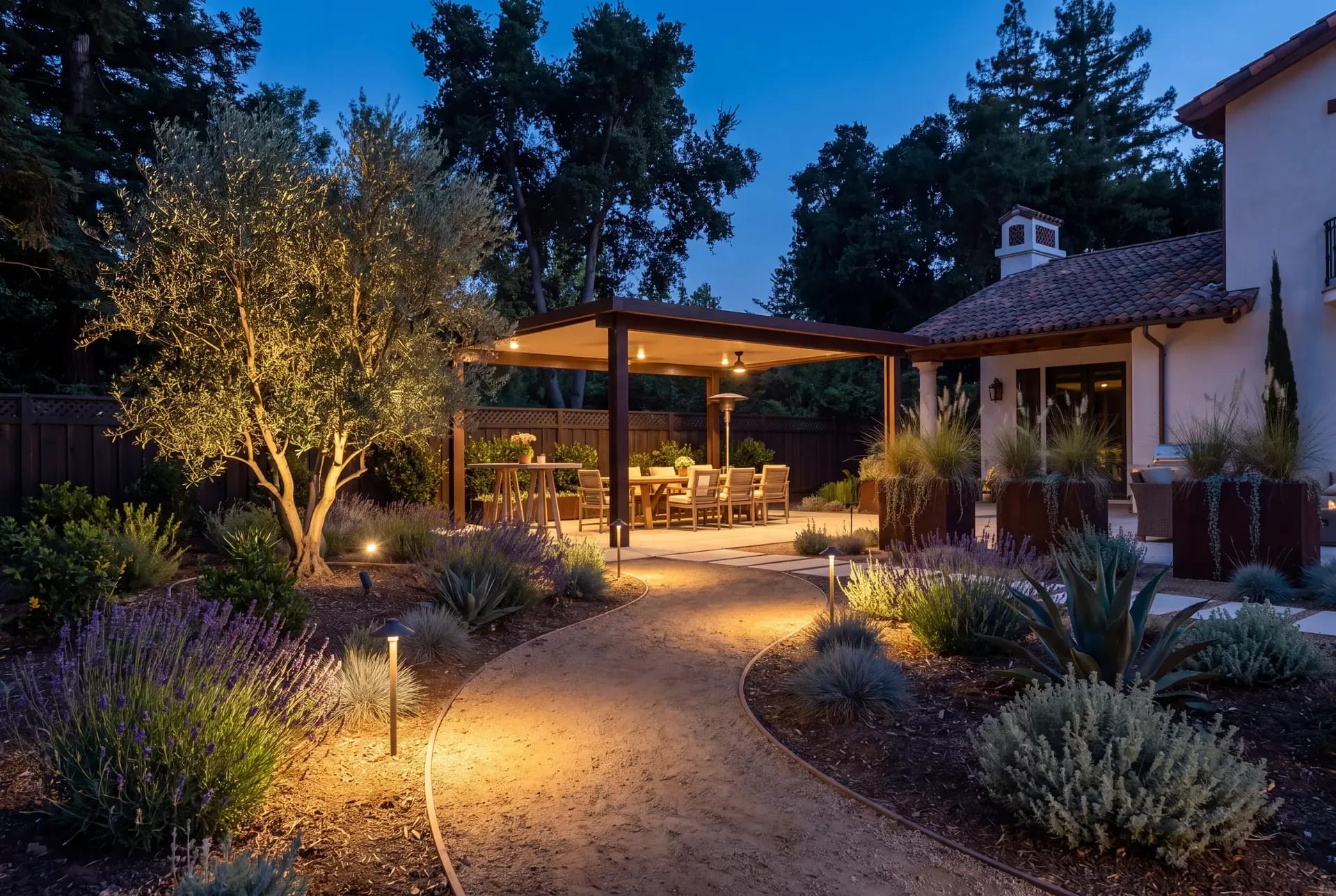
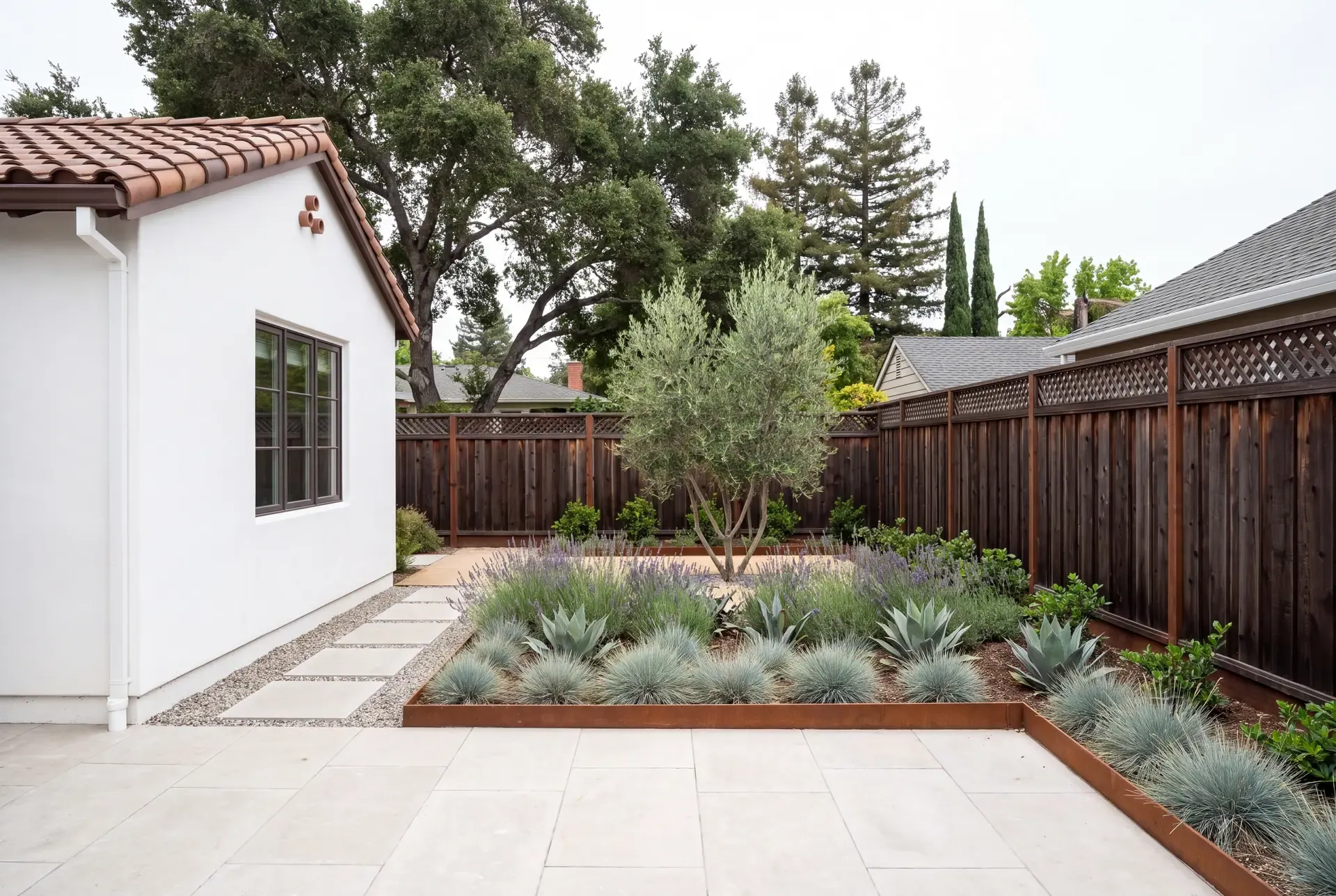
The practical design question is: how do you create 5 feet of noncombustible buffer that does not look like a fire break?
Gravel and stone as deliberate hardscape. A 5-foot band of angular crushed gravel or decomposed granite along the foundation reads as a landscape feature if it is edged cleanly and transitions intentionally to plantings beyond. Use 3/4-inch angular stone (not rounded pea gravel, which shifts underfoot) in a warm buff or grey tone that complements the house exterior. We cover hardscape material selection in our hardscape service.
Pavers at the back door. Where the buffer intersects a patio door or back entrance, extend the patio material — concrete pavers, porcelain pavers, or natural stone — all the way to the foundation. This serves both the Zone 0 requirement and the practical need for a clean transition at the most-used doorway.
Low groundcover as the exception. The draft regulation is expected to allow irrigated, herbaceous groundcovers — think creeping thyme, dymondia, or a closely mowed native sedge — within Zone 0, provided they are kept green and free of dead thatch. This is where the "well-irrigated" qualifier matters: in a drought-conscious Bay Area, this may mean a dedicated drip zone with a smart controller, not a spray head running on the main lawn schedule. Our landscape service can design an irrigation system that meets both the plant's needs and local water-use rules.
Fence connections. If a wood fence meets the house, the draft regulation is expected to require a 5-foot noncombustible section — typically a metal gate or a short section of metal fencing — at the connection point. This prevents a fence fire from traveling directly into the structure's wall or eaves.
Check With Your Local Fire Agency
Because Zone 0 is still a draft regulation in progress, the final requirements may differ from what is described here. More importantly, your local fire agency may already enforce defensible-space rules that go beyond the current state minimum. Some Bay Area fire districts have their own Zone 0 guidance in place, sometimes called "immediate zone" or "home ignition zone" requirements.
Before starting any landscape project in a fire-prone area, confirm current requirements with:
- Your city or county fire department
- The local fire protection district if you are in an unincorporated area
- The Santa Clara County FireSafe Council for county-specific guidance
R&R Backyard Remodeling works in areas that include mapped high fire hazard zones, particularly in Los Gatos and the foothills. Our Los Gatos backyard remodeling service addresses fire safety as part of every hillside project design.
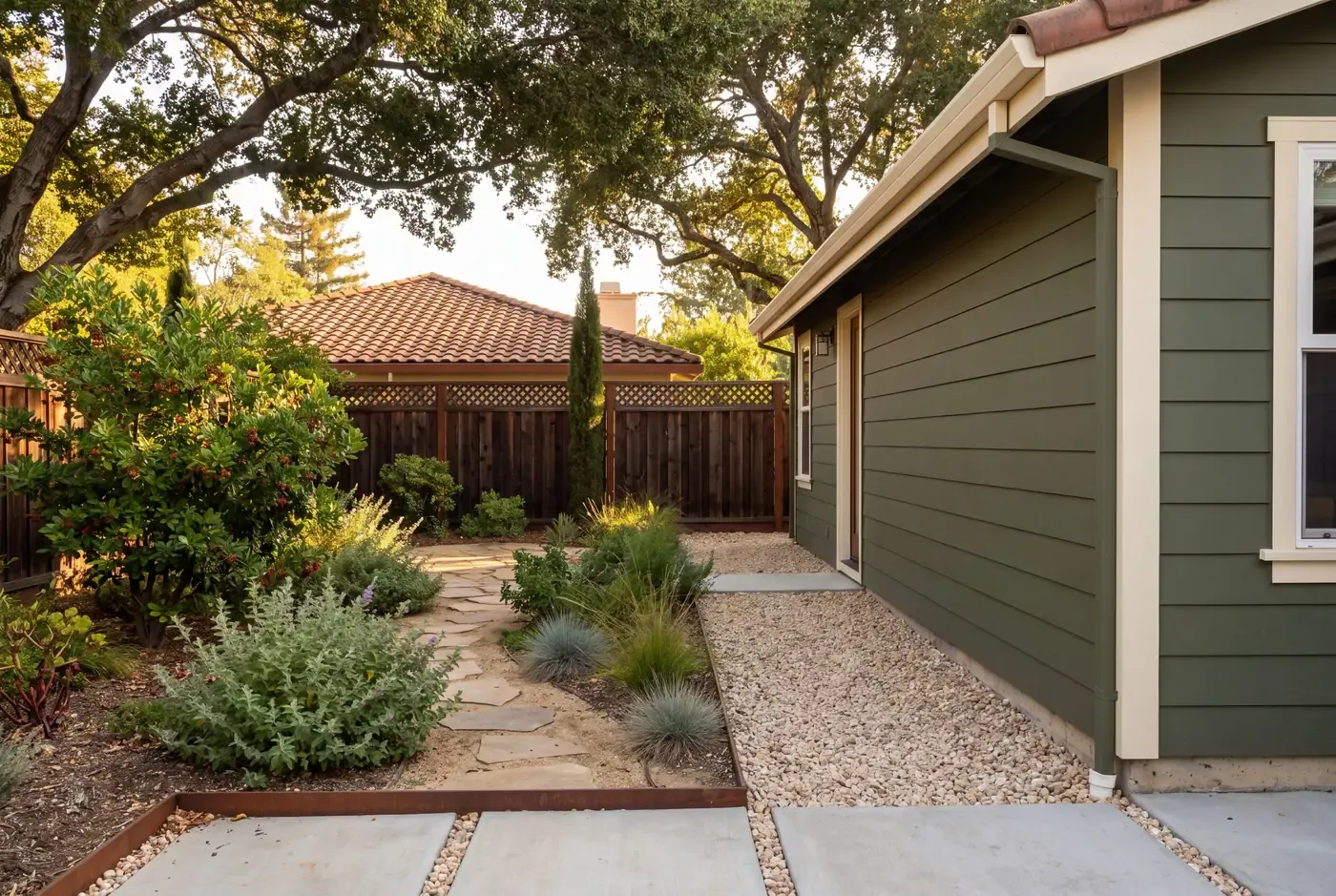
How Zone 0 Interacts With Existing Defensible Space Zones
Zone 0 does not replace Zone 1 and Zone 2 — it adds a stricter inner ring. Understanding how the zones work together prevents the common mistake of treating each zone in isolation.
Zone 1 (5-30 feet) remains the "lean, clean and green" zone: plants should be low, spaced to break up fuel continuity, and kept free of dead material. Trees should be limbed up so that low branches do not create a fire ladder into the canopy. Hardscape in Zone 1 — patios, paths, driveways — serves as natural fuel breaks.
Zone 2 (30-100 feet, or to the property line) is the reduced-fuel zone: larger trees can remain but should be spaced, and ladder fuels (shrubs growing under trees) should be managed. The goal is to reduce fire intensity, not eliminate all vegetation.
Zone 0 sits inside Zone 1 and is the most restrictive — noncombustible ground treatment, no woody vegetation, and special attention to the structure-to-ground transition. Together, the three zones create a graduated defense that starts with preventing ember ignition at the building wall and works outward to reduce fire behaviour as it approaches.
Homeowners sometimes focus on Zone 1 clearance and neglect the 5 feet nearest the house — but ember research from the Insurance Institute for Business and Home Safety (IBHS) has demonstrated repeatedly that embers landing in combustible mulch or dead vegetation within a few feet of a wall are among the most common ignition pathways. Zone 0 targets that specific vulnerability.
Practical Steps You Can Take Now
Even without a finalized regulation, there are steps Bay Area homeowners can take today that align with the expected Zone 0 requirements and improve fire safety immediately.
Replace bark mulch with gravel within 5 feet of the house. This is the single highest-impact change most homeowners can make on a weekend. Remove combustible mulch, lay landscape fabric to suppress weeds, and spread 2 to 3 inches of 3/4-inch angular crushed stone. The result is a clean, fire-resistant ground treatment that also reduces moisture against the foundation — a secondary benefit in our winter rainy season.
Move firewood stacks at least 30 feet from the house. Firewood is fuel, and storing it against the house or under a deck puts it inside Zone 0 or Zone 1. A dedicated firewood rack positioned away from structures is inexpensive and eliminates a significant ember-catch hazard.
Clean gutters and roof valleys. Dead leaves and needles in gutters are ember traps. While this is not strictly a Zone 0 landscape measure, it is the other critical 5-foot zone — the one above your head.
Check fence-to-house connections. If a wood fence butts directly against your house siding, consider replacing the last 5-foot section with a metal gate or a noncombustible fence panel. This breaks the continuous fuel path from the fence into the structure.
Zone 0 is coming, but it is not here yet as an enforceable statewide rule. The most sensible approach for a Bay Area homeowner in a fire-prone zone is to treat it as a design constraint — like a setback or a height limit — rather than a crisis. If you are renovating your yard anyway, use Zone 0-compliant materials at the foundation now. If you are not planning a renovation, make the easy changes (swap bark mulch for gravel, move firewood away from the house) and plan the rest for your next landscape cycle.
If you live in Los Gatos, the Santa Cruz Mountains foothills, or another Bay Area fire-prone zone and are planning a backyard project, contact us. We can help design a landscape that meets the emerging Zone 0 standards without sacrificing the garden you want.