The Bay Area contains at least three distinct outdoor climates separated by only 30 miles. A backyard in San Jose bakes under afternoon sun while a yard in Palo Alto sits under the marine layer. A patio in Los Gatos catches canyon wind every afternoon at 3 p.m., while three miles downhill the air is still. Good backyard design starts with knowing which climate you are actually in — not the one you imagine based on the region's postcard reputation.
The Fog Belt: Peninsula and Coastal Zones
The marine layer — the Pacific's cool, damp air mass — enters the Bay through the Golden Gate and follows the gap between the Santa Cruz Mountains and the East Bay hills. This puts Palo Alto, Menlo Park, Mountain View, Los Altos, and the western edges of Sunnyvale and Cupertino squarely in the summer fog belt.
What this means for your yard:
- Summer temperatures run 10 to 15 degrees cooler than San Jose. An 85-degree San Jose afternoon might be 70 and overcast in Palo Alto. This is pleasant for sitting outside but limits the plants that will thrive.
- Fog drip is a real moisture source. Coastal fog condenses on foliage and drips to the ground, effectively irrigating plants adapted to it — coast redwoods and many California natives evolved with this mechanism. It also means wooden structures in the fog belt need more maintenance than those in the dry inland zones.
- Morning sun, afternoon fog is the typical summer pattern. Design for morning use. Place seating areas on the east or southeast side of the house where they will catch sun before the marine layer rolls in. A west-facing patio in Palo Alto will be under overcast by 3 p.m. most summer days.
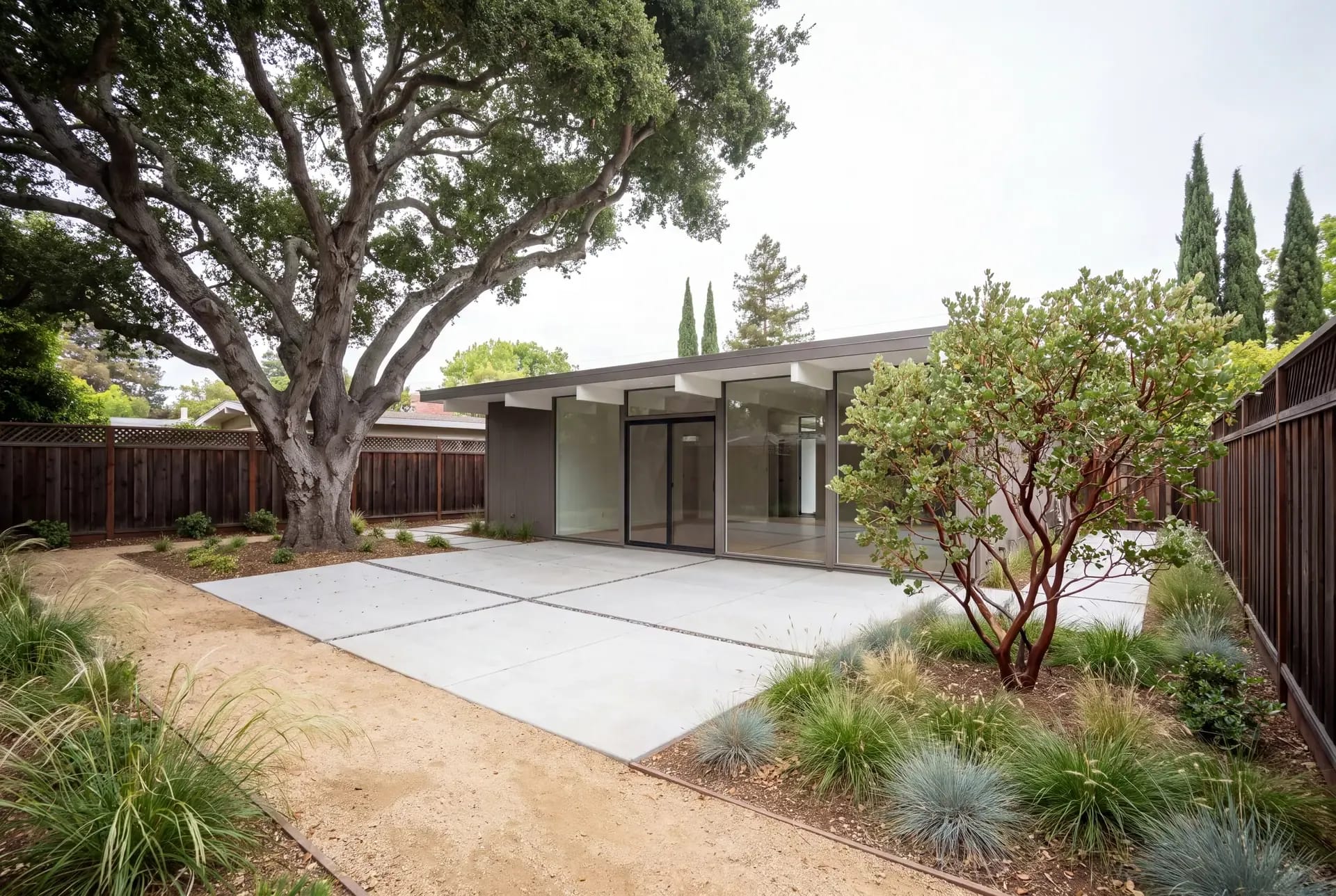
- Plant for cool, not heat. The classic Mediterranean sun-lovers — lavender, rosemary, olive trees — will survive but not thrive in the fog belt. Instead, look to the plants that evolved in California's coastal fog zone: ceanothus, coffeeberry, toyon, manzanita cultivars, Douglas iris, and native ferns. Cool-season ornamental grasses like California fescue and purple needle grass handle the moisture better than their heat-loving counterparts.
In Sunset climate zone terms, the fog-belt Peninsula falls in zone 17 (thermal belts with cool maritime influence). This is more useful for plant selection than the USDA hardiness zone, which only measures winter lows and would group Palo Alto together with inland areas that have very different summers.
The Warm South Bay: San Jose, Santa Clara, Campbell
San Jose and the southern valley floor are in the rain shadow of the Santa Cruz Mountains. The marine layer arrives later, burns off faster, and often never reaches the southern valley at all during heat events. The result is a climate closer to the hotter interior valleys, with summer highs regularly in the 80s and 90s.
Design implications:
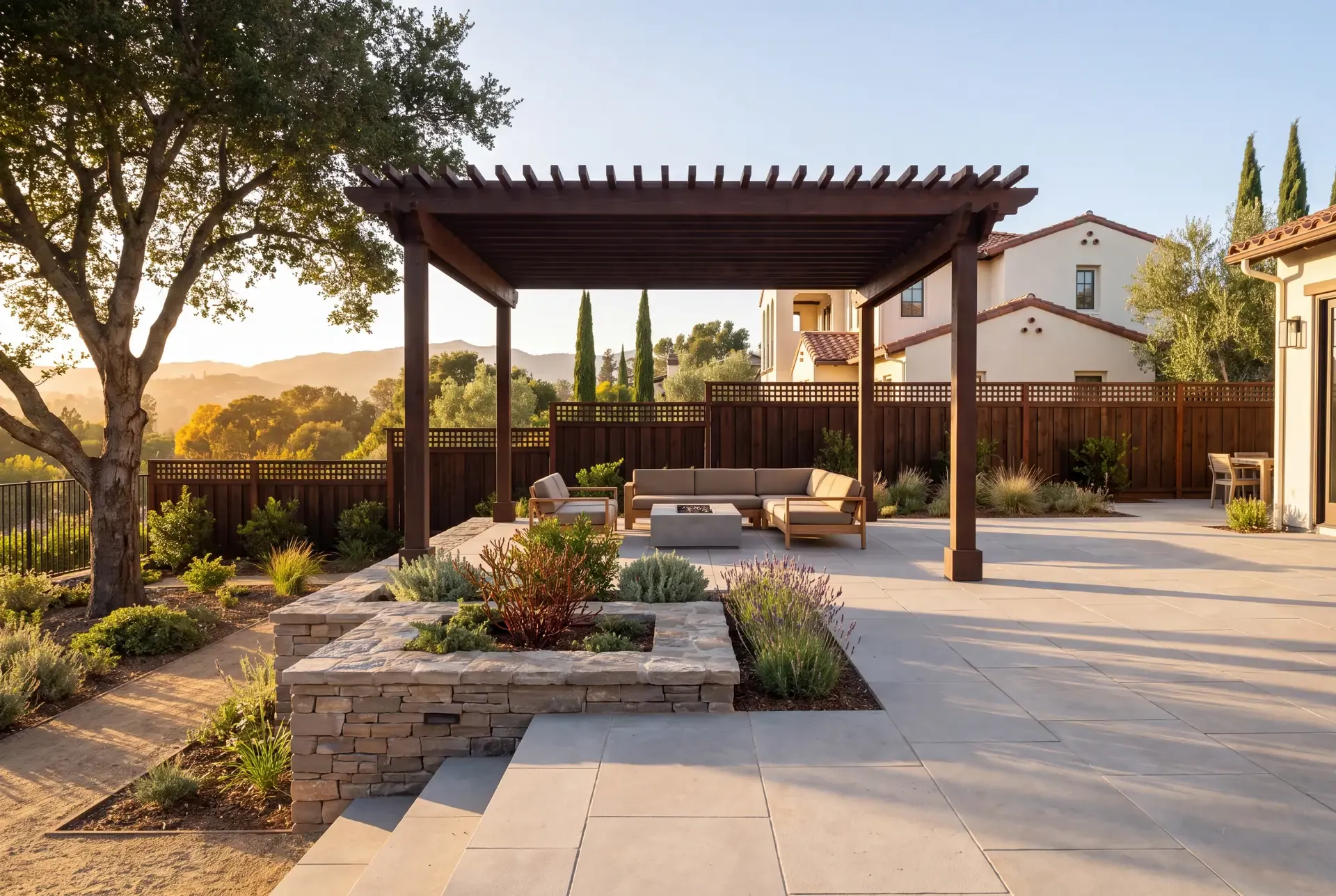
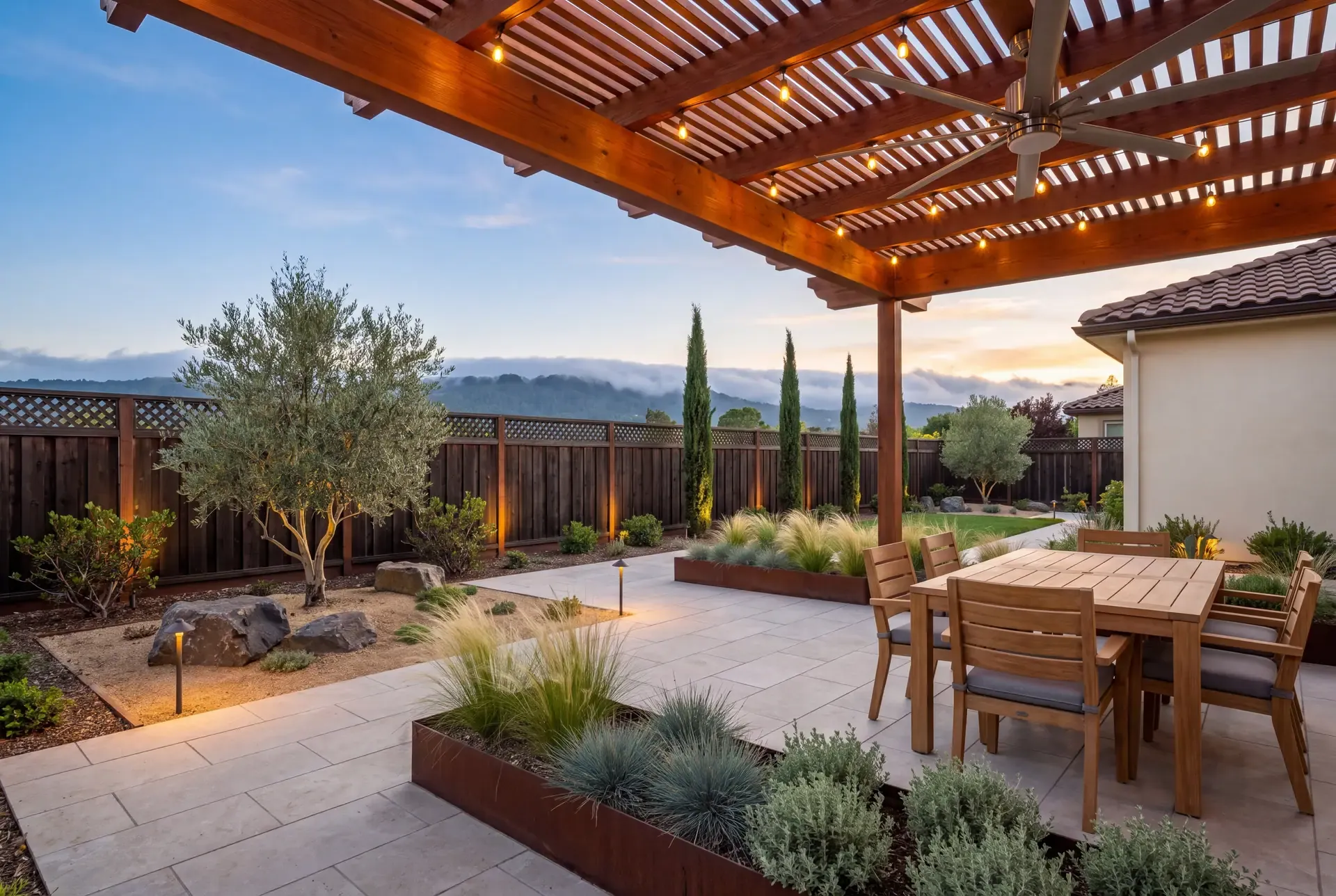
- Shade is not optional. A south-facing or west-facing patio in San Jose without overhead cover will be unusable between 2 p.m. and 6 p.m. from June through September. A patio cover, whether a louvered roof system, a wood pergola with climbing vines, or a shade sail, is the single most impactful addition to a San Jose backyard. Our shading article covers the options and tradeoffs.
- Afternoon heat radiates from hardscape. Light-coloured pavers, permeable surfaces that stay cooler than solid concrete, and ground-level planting that shades the patio edge all reduce the heat-island effect immediately around the seating area.
- Plant for heat and drought together. The South Bay's summer heat coincides with California's dry season, so the plants that work best handle both. Western redbud, Cleveland sage, California buckwheat, desert willow, and many succulents (agave, aloe, yucca) thrive here. The UC Master Gardeners of Santa Clara County maintain plant lists specific to this climate.
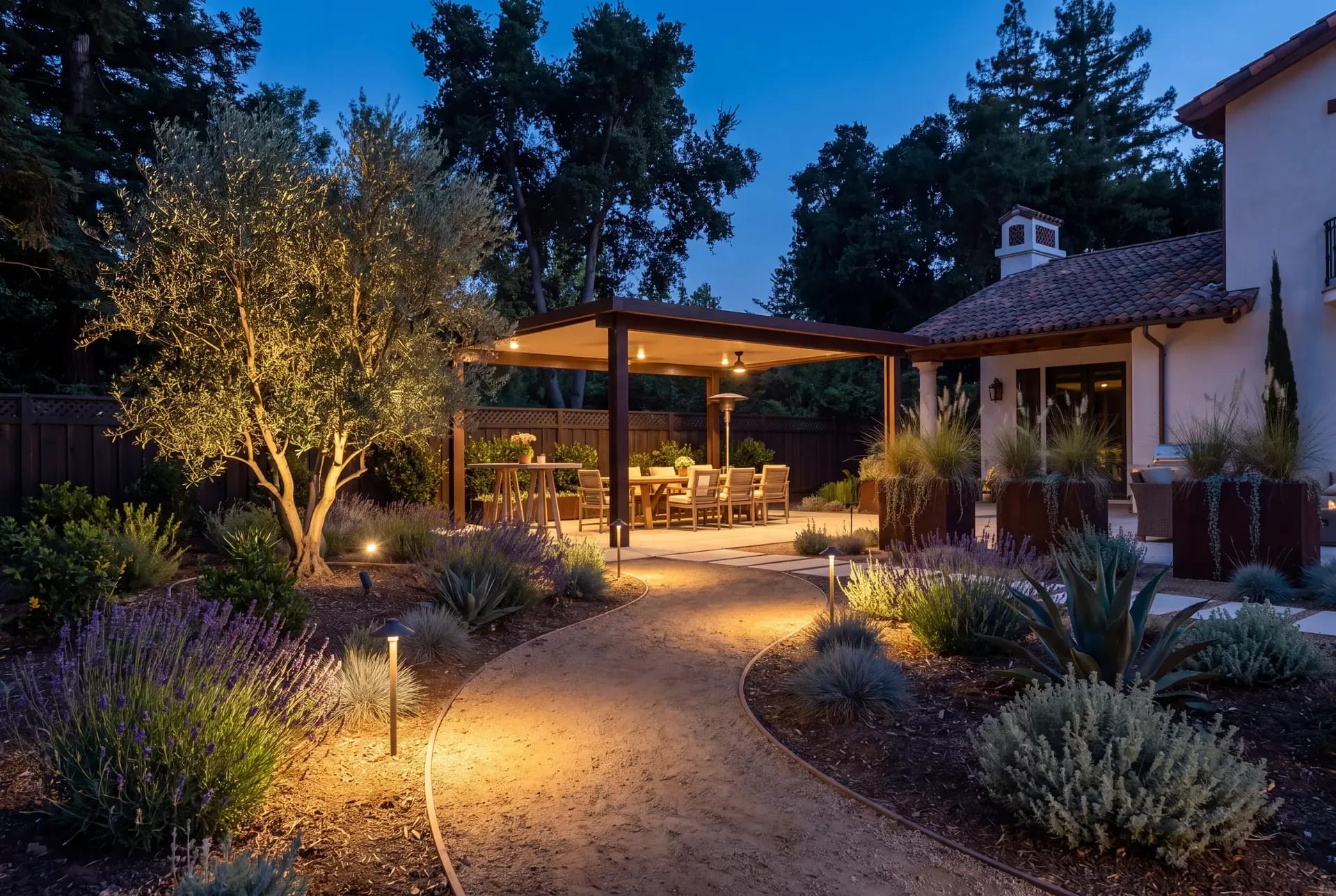
- Evening cooling is faster in San Jose than on the Peninsula. The dry air radiates heat quickly after sunset, so an outdoor dining area with overhead heat lamps can be comfortable well into the evening even after a 95-degree day. The same setup in foggy Palo Alto would feel damp.
In Sunset terms, San Jose and the inland South Bay sit primarily in zone 15 (warm thermal belts with winter chill). The climate supports a wider palette than the fog belt, provided summer water is available.
The Wind Gaps: Afternoon Drainage
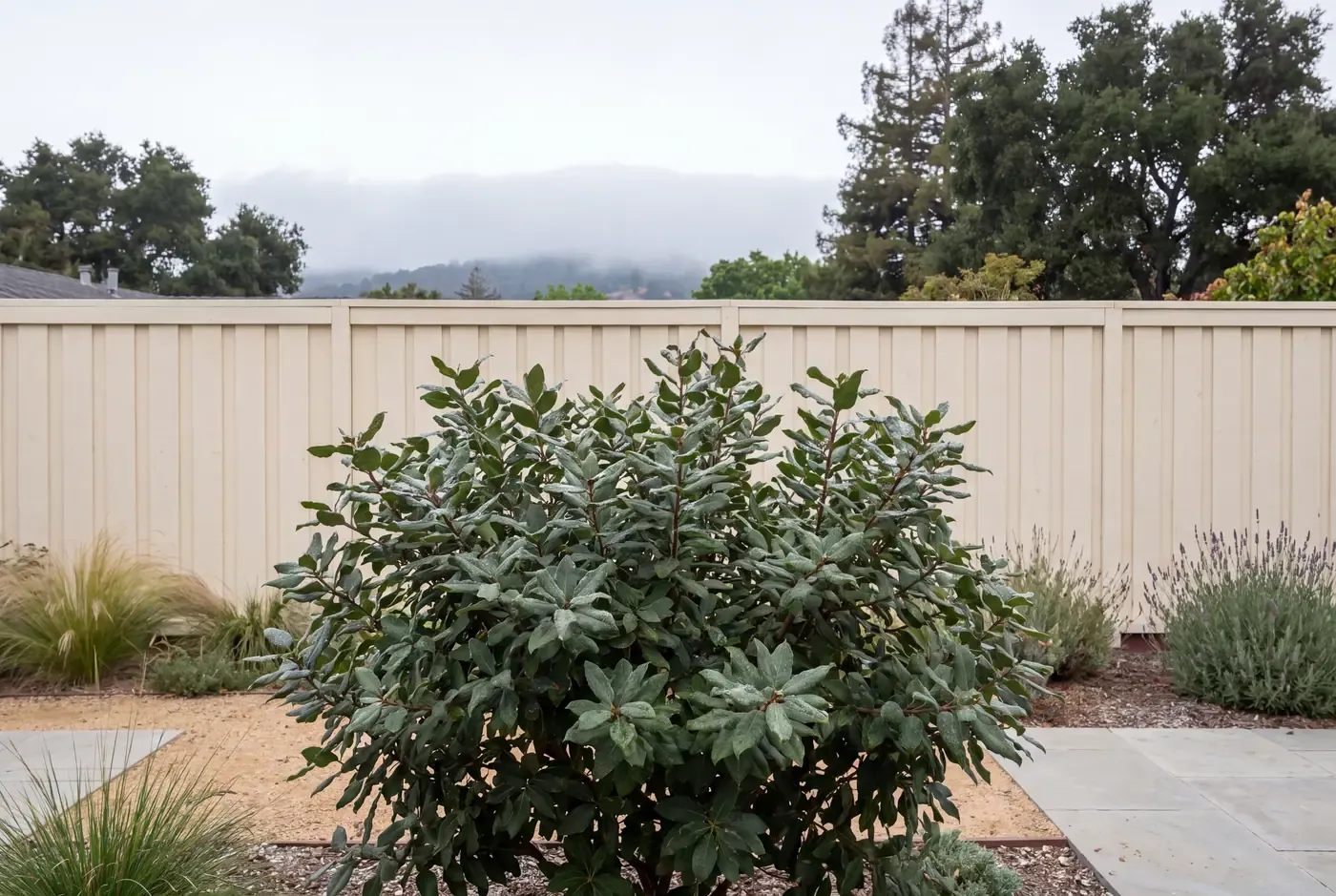
San Francisco Bay's thermal engine creates predictable afternoon winds. As the Central Valley heats up, rising air pulls cooler marine air through every gap in the Coast Range — the Golden Gate, the San Bruno Gap north of San Bruno Mountain, and the passes through the East Bay hills. The wind accelerates through these gaps, and depending on your exact location, you may sit in one of the acceleration zones.
Los Gatos, in particular, sits at the mouth of the Los Gatos Creek canyon, which funnels afternoon wind down from the Santa Cruz Mountains. Backyards on the east-facing slopes of the foothills, or in the flat areas just downhill from the canyon mouth, experience regular afternoon gusts. The same pattern affects homes near the base of the East Bay hills in Fremont and Milpitas.
Wind design principles:
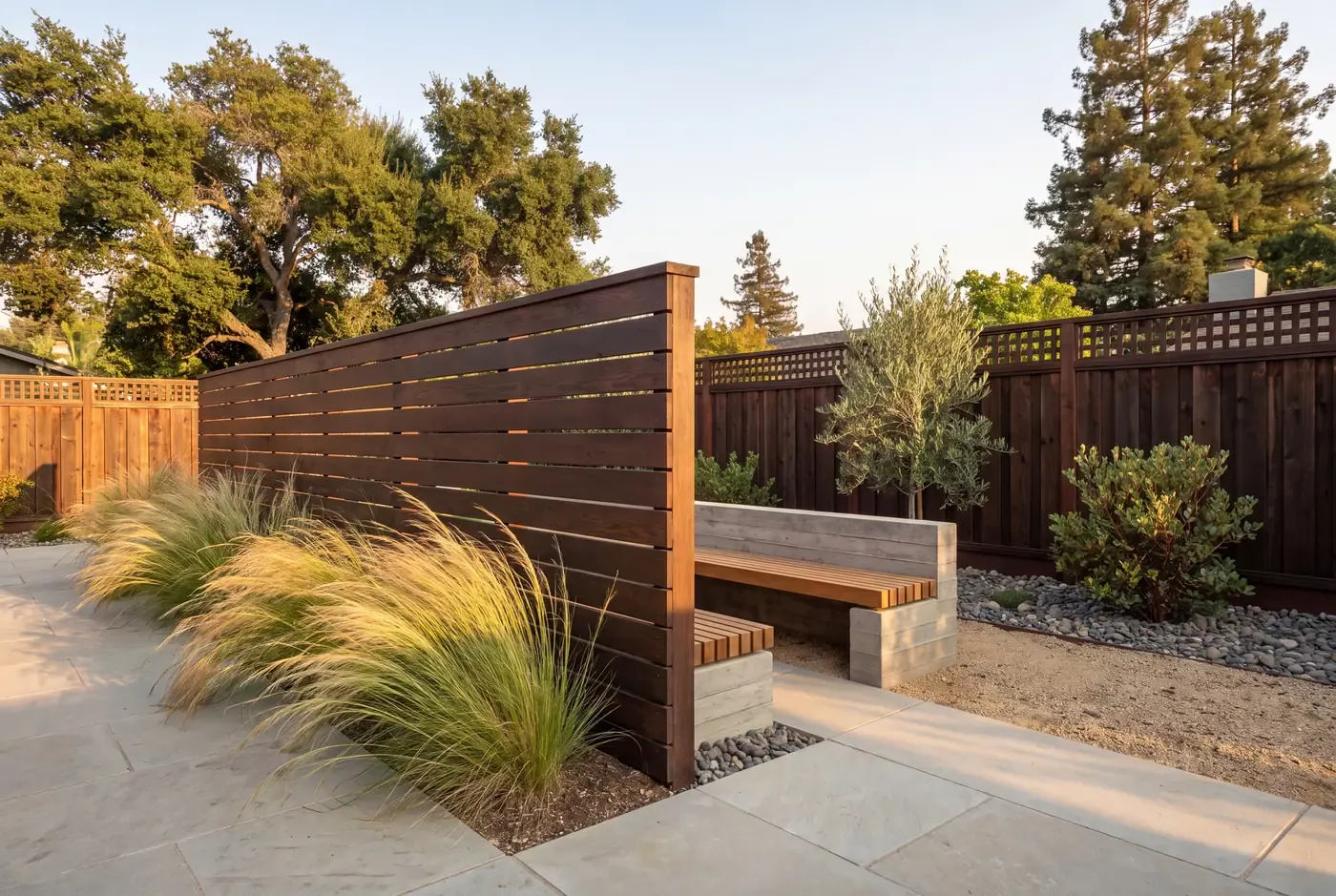
- Diffuse, do not block. A solid fence or wall creates turbulence on the leeward side — the wind hits the barrier, goes up and over, and swirls back down. A slatted fence or a dense but permeable hedge (toyon, Pacific wax myrtle) lets some air through, reducing downstream wind speed without creating a rotor effect.
- Put seating on the leeward side. Position the primary patio or seating area downwind of the house, a garage, or a dedicated windbreak structure.
- Choose plants that handle wind loading. Ornamental grasses like deer grass and California fescue bend rather than break. Avoid large-leaved plants like canna lilies or banana plants in wind-exposed spots — the leaves shred.
The Transition Zones: Sunnyvale, Cupertino, Mountain View
Between the foggy Peninsula and the hot South Bay sits a transition zone — roughly Sunnyvale, Cupertino, and the western edge of Santa Clara. These areas get partial marine-layer influence, with morning fog that burns off by 10 or 11 a.m. and afternoon sun that is warm but not searing. This creates the most forgiving backyard climate in the region: enough sun for a wide plant palette, enough marine influence to avoid the worst of the inland heat, and relatively light wind compared with the exposed hillside locations.
The design implication is flexibility. A yard in Sunnyvale or Cupertino can support the classic Mediterranean plants — lavender, rosemary, olive, citrus — that struggle in the fog belt, while also accommodating the shade-loving California natives that would crisp in San Jose's full afternoon sun. The plant palette is the broadest in the Bay Area, and the hardscape does not need to be as aggressively shaded as in the southern valley.
Fruit trees do particularly well in this transition zone. The winter chill is sufficient for most stone fruit (peach, nectarine, plum, apricot), and the summer heat is enough to ripen them without the sun-scald that can damage fruit in the hotter inland areas. Santa Clara Valley was once known as the Valley of Heart's Delight for its orchards, and the conditions that made that possible still exist in the transition-zone microclimate.
Sun Tracking: Where the Light Goes on Your Lot
Before placing a patio, a vegetable bed, or a shade tree, know where the sun travels across your lot — in both summer and winter. The sun's path changes dramatically at 37 degrees north latitude (San Jose's latitude).
In late June, the sun rises in the northeast, travels high overhead (nearly 76 degrees above the horizon at solar noon), and sets in the northwest. A south-facing wall gets direct sun for most of the day; a north-facing wall gets almost none.
In late December, the sun rises in the southeast, travels low (about 30 degrees above the horizon at noon), and sets in the southwest. That same south-facing wall gets low-angle sun all day; a north-facing wall stays in full shade.
The practical takeaway: a deciduous shade tree on the south or west side of a patio gives you summer shade when you need it and allows winter sun through when you want warmth. An evergreen tree in the same position blocks the sun year-round. A patio on the north side of the house will be shady and cool in summer — pleasant for a seating area — but also dark and cold in winter.
R&R's design team maps sun paths for your specific lot orientation and season as part of the concept phase, so the placement of every shade structure, tree, and seating area is based on real angles rather than assumptions.
Water Across the Microclimates
The water needs of a Palo Alto yard differ from a San Jose yard, and the region's water agencies reflect that. Santa Clara Valley Water District (Valley Water) serves both areas, but the irrigation strategy should match the local conditions.
A fog-belt Peninsula yard may need supplemental irrigation only during the driest months (July through October), with the marine layer providing natural moisture the rest of the year. A San Jose yard may need consistent irrigation from May through October. In both areas, drip irrigation with a smart controller that adjusts for weather — reducing or skipping cycles when it rains or when fog provides moisture — is more efficient and more code-compliant than a standard timer.
Our landscape service includes irrigation design calibrated to your specific microclimate, plant choices, and local water-agency requirements.
Every Bay Area backyard has its own climate signature. Contact us for a consultation — we visit your property, assess your specific microclimate conditions, and design a yard that works with them rather than fighting them.