California's 2025 Building Energy Efficiency Standards (Title 24, Part 6) took effect January 1, 2026, with new rules on residential pool and spa heating. Gas-fired heaters lose their place as a primary heat source; heat pumps and solar thermal step into that role.
What "Title 24" covers, and where pool heating fits
Title 24 is California's broad title for the state's building regulations, published by the California Building Standards Commission. Part 6 is the energy chapter, written and updated by the California Energy Commission under its Building Energy Efficiency Standards programme. The latest edition is officially called the 2025 Building Energy Efficiency Standards and applies to building permit applications submitted on or after January 1, 2026.
The energy code reaches farther than most homeowners expect. Beyond indoor HVAC and lighting, Part 6 also governs residential pool and spa heating, covers and shell details, equipment certifications, and the controls that pair a heat pump with a backup heater. Section 110.4 is the heart of the pool and spa rules; Section 110.5 covers pilot lights. Knowing roughly where your project lands in those sections makes conversations with a designer or a building department much more productive.
The 2025 Energy Code is live as of January 1, 2026
The Energy Commission's summary is direct: the 2025 Energy Code encourages energy-efficient approaches to building decarbonization, with heat pumps for space heating and water heating as the main lever. Permit applications submitted before January 1, 2026 are evaluated under the prior (2022) standards; anything permitted on or after January 1, 2026 is evaluated under the new edition. That single date on your building permit application is the dividing line.
If your project is already in design, the calendar matters. Pulling a permit a few weeks earlier or later can change the equipment your project is required to install. It's one of the questions worth pinning down in the schematic phase.
What the 2025 code requires for residential pool and spa heating
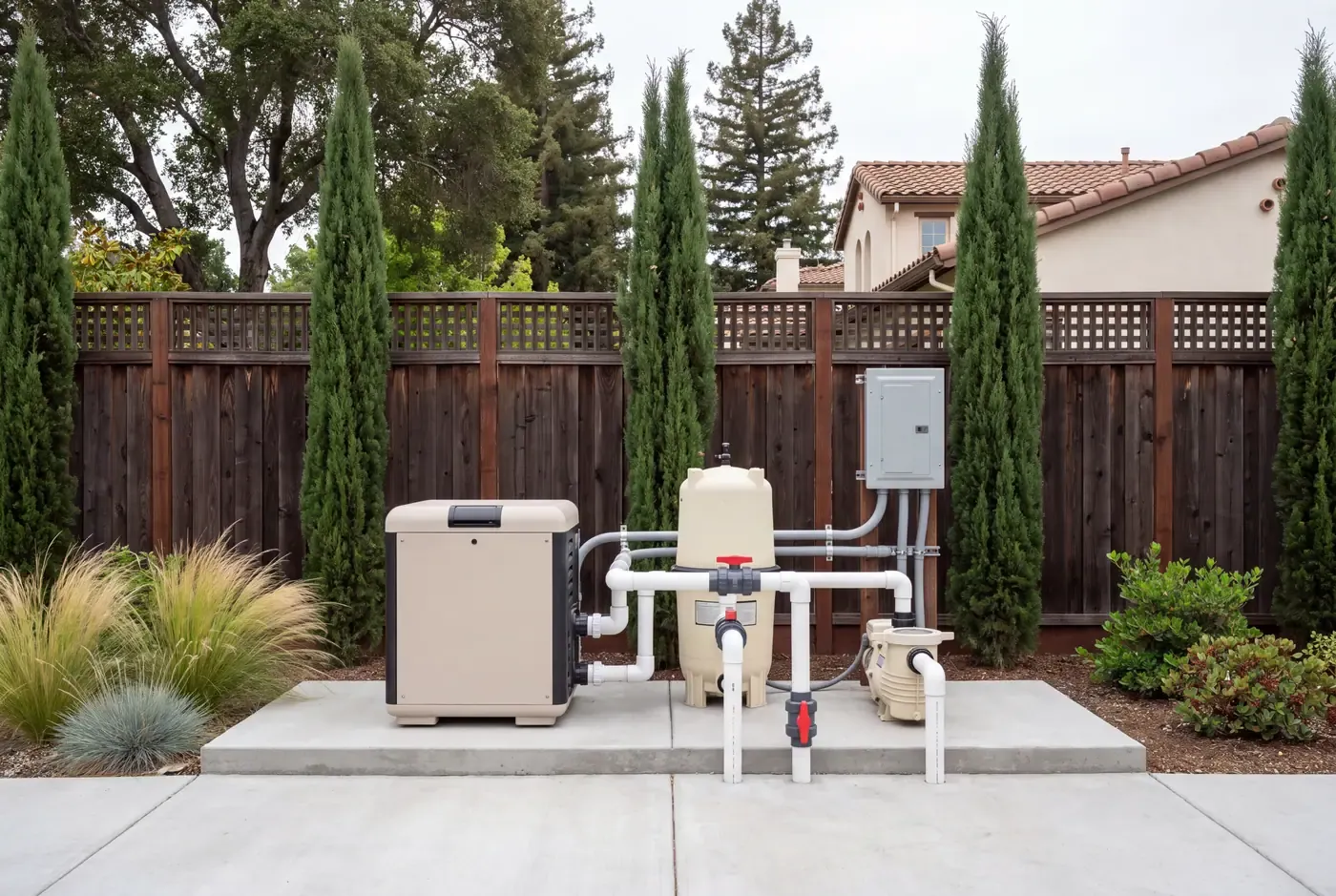
The 2025 standards keep pool and spa heating allowed, but they change what is allowed as a primary system. Section 110.4(c) gives a residential pool or spa five compliance paths for its heat source. At least one of the following must be met for the heating system to comply:
- A solar pool heating system sized to cover at least 60 percent of the pool or spa surface area (single-family residential threshold)
- A heat pump pool heater serving as the primary system, sized per Reference Joint Appendix JA16.3, with the freedom to add a supplementary heater
- A heating system that draws at least 60 percent of its annual heating energy from on-site renewable or recovered energy
- A combination of solar pool heating plus a heat pump, with no supplementary heater at all
- An alternative system that the Energy Commission Executive Director has determined uses no more energy than the options above
Where a heat pump is paired with a backup, Section 110.4(d) requires controls that lock out the backup whenever the heat pump alone can meet the load, and that set the heat pump's cut-on and cut-off temperatures higher than the backup's, so the most efficient unit runs first. Section 110.5 closes a related loophole by prohibiting continuously burning pilot lights on natural gas pool and spa heaters; any gas equipment must light on demand.
Two related requirements stay in the standards from previous editions and still apply: outdoor pools and spas with electric or gas heating must have a cover, and the plumbing must include at least 18 inches between the filter and the heater (or pre-plumbed connections for future solar). Both are easy to address during design. For an at-a-glance read on how these requirements interact with the rest of the build, see our pool versus spa planning guide.
Reach codes let local cities go further than the state
Title 24 is a statewide floor, not a ceiling. California cities and counties can adopt reach codes that go beyond the state standard in their own jurisdiction, and many Bay Area municipalities already have. The headline direction across the region is to remove natural gas entirely from newly constructed buildings, including the equipment pad, and require electric-ready infrastructure for water heating, space heating, cooking, and pool and spa heating. The exact scope, dates, and exemptions depend on the city or county.
This is where a national summary stops being enough. Reach codes vary by jurisdiction. For an actual project, the local building or planning department is the authority on what is required at your address, on the date your permit is filed. R&R Backyard Remodeling handles all permitting in-house for our projects, but for any reader doing their own homework, the relevant city or county's building division is the right call before selecting equipment.
Practical effects on a typical backyard project
A pool remodel that includes new heating equipment is treated as an alteration under the code, which can trigger a full review against the current edition. The most visible consequences are equipment choices and equipment pad layout.
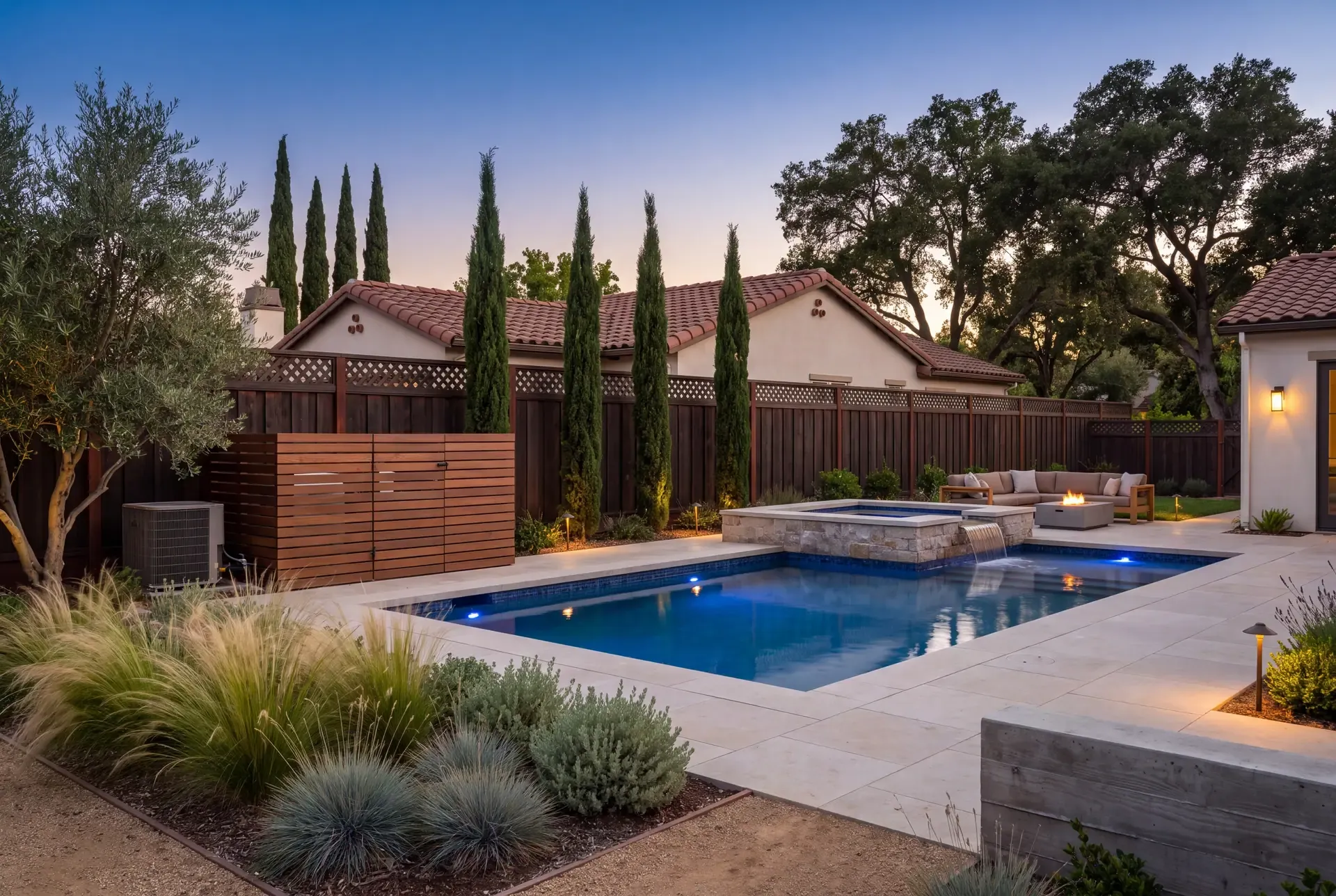
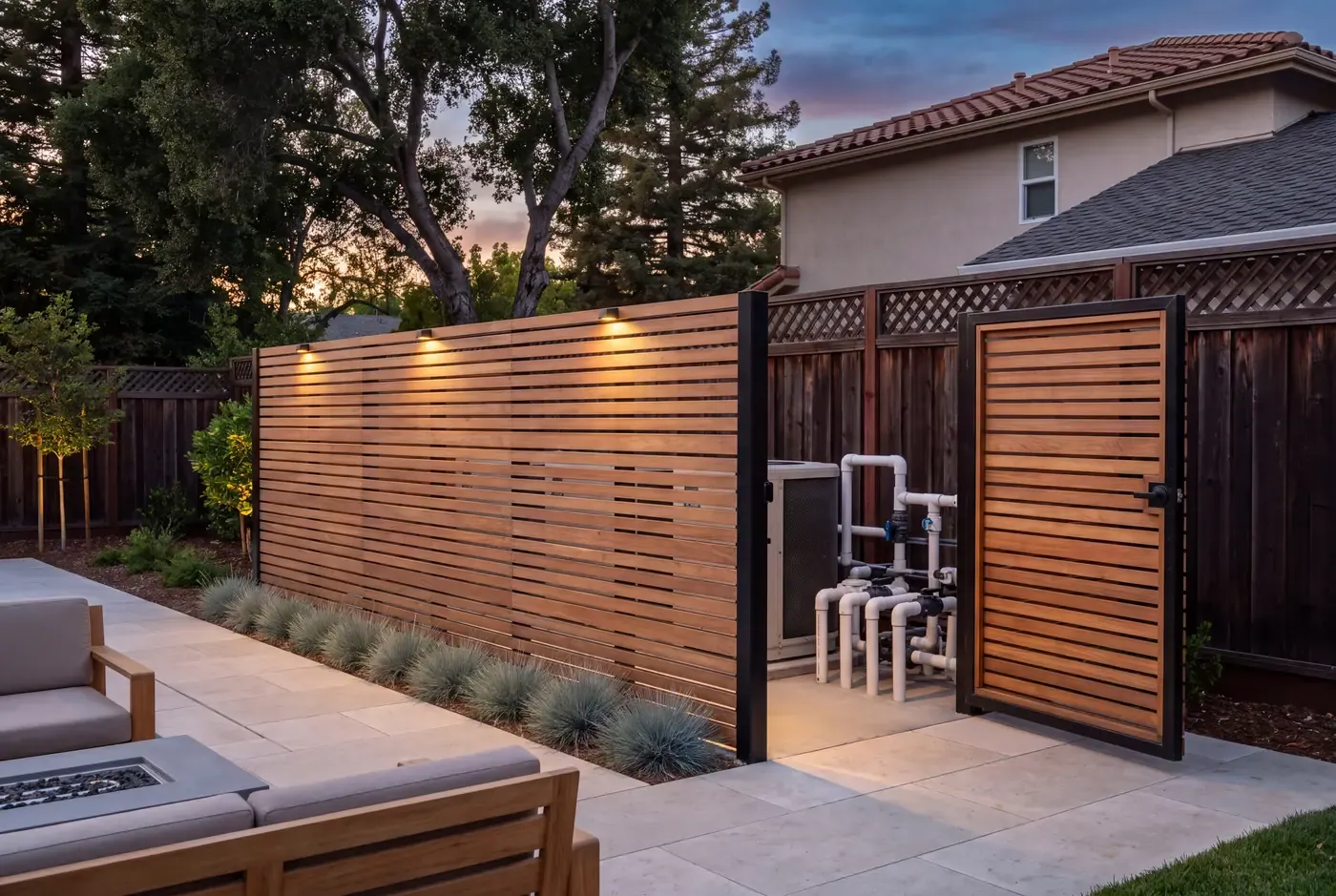
Heat pumps work well in most of Northern California but they have a few practical constraints worth flagging up front. They are larger than gas heaters, generate less heat when outdoor air is colder, and need a clear path for airflow, so equipment pad sizing and placement matter. A solar pre-plumb line and an electrical conduit stub-out from the pad back to the subpanel cost almost nothing during construction and quietly future-proof the install for either a solar thermal add-on or a later heat pump swap.
If your project includes an ADU or a pool house, the equipment pad decisions often overlap with Title 24's electric-ready and solar-ready rules for the building itself. Coordinating the pool heating plan with the structure's electrical service early avoids a second service upgrade later.
Permits and inspections
Most California jurisdictions require a combination of building, electrical, plumbing, and mechanical permits for a pool or spa project. The electrical permit covers the subpanel and any new circuits serving pumps, heaters, automation, and lighting. Plumbing covers the gas line, if any, and the water circulation piping. Mechanical is generally where the heater is reviewed. After work is complete, the pool barrier inspection, covered under the California Swimming Pool Safety Act and your local code, runs alongside the final approval.
Because permit review timelines are real and the rules differ between cities, an experienced design-build firm typically sequences permit submission alongside construction drawings. The result is fewer surprises in plan check and a faster move to the actual build.
Picking equipment with the 2025 code in mind
For most Bay Area homeowners, the easiest path through the new rules is a properly sized heat pump pool heater, with the option to add a small gas or electric-resistance backup. Solar thermal is attractive for homeowners with the right exposure and roof area, but it adds visible collectors and a separate maintenance path. Whichever system you choose, look for AHRI 1160 certification for heat pumps and ICC/APSP 902/SRCC 400 for solar pool heaters, as those are the standards the code cross-references.
This is also where water and electric agency rebates intersect with code compliance. Several Bay Area agencies offer incentives for heat pump pool heaters, and the dollar amounts, eligible equipment lists, and paperwork change periodically. Confirm current programs with your local water agency or community choice aggregator before signing a contract, and treat any quoted figures as moving targets.
Title 24 is a piece of a broader compliance puzzle for a backyard project. Pool safety, enclosure design, and barrier hardware are governed by the Swimming Pool Safety Act, and the deck material choice sits under California's building and accessibility standards as well as basic hardscape practice.
When to ask the building department
If your project is small, the building department can answer in a few minutes whether your scope actually triggers a Title 24 review at all. If your project is a full custom build with an ADU, a complex equipment pad, and aggressive performance targets, the conversation should happen in schematic design, not after the permit is filed. Either way, the right question to ask is: which edition of Title 24, and which reach code amendments, are in effect on the date I plan to submit?
Codes change. As of 2026, the path through the state code is well-defined and the trend in the Bay Area is clearly toward electric pool heating. If a future amendment makes a current choice obsolete, that is something the next round of designers will deal with. For the project in front of you, work to the current rules with a designer who reads them regularly.
If a backyard with a pool and spa is on your horizon, the pool and spa construction page walks through how we approach projects from concept through final walkthrough, including all permitting and code compliance. We design-build across the South Bay and Peninsula and would be glad to look at your lot.