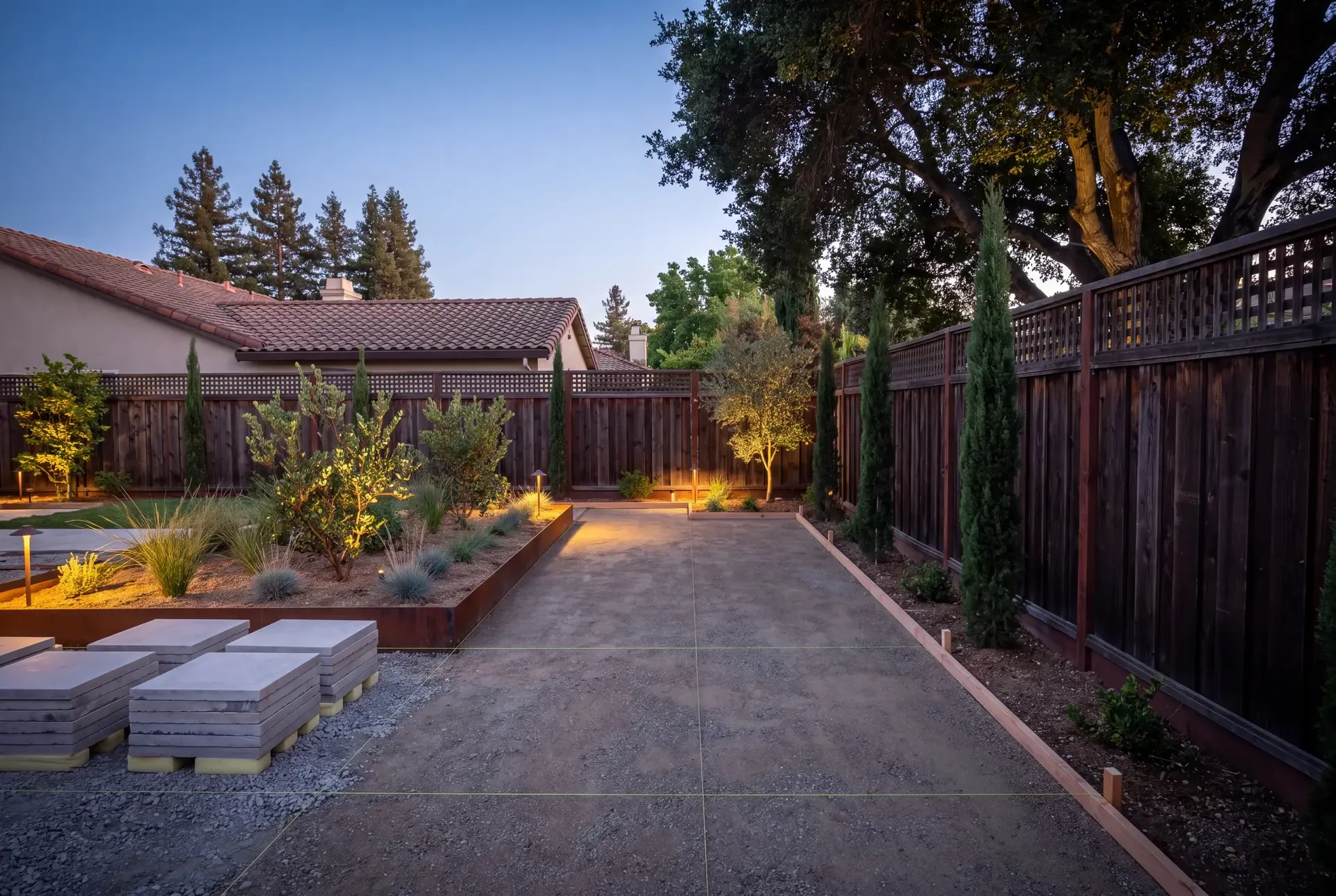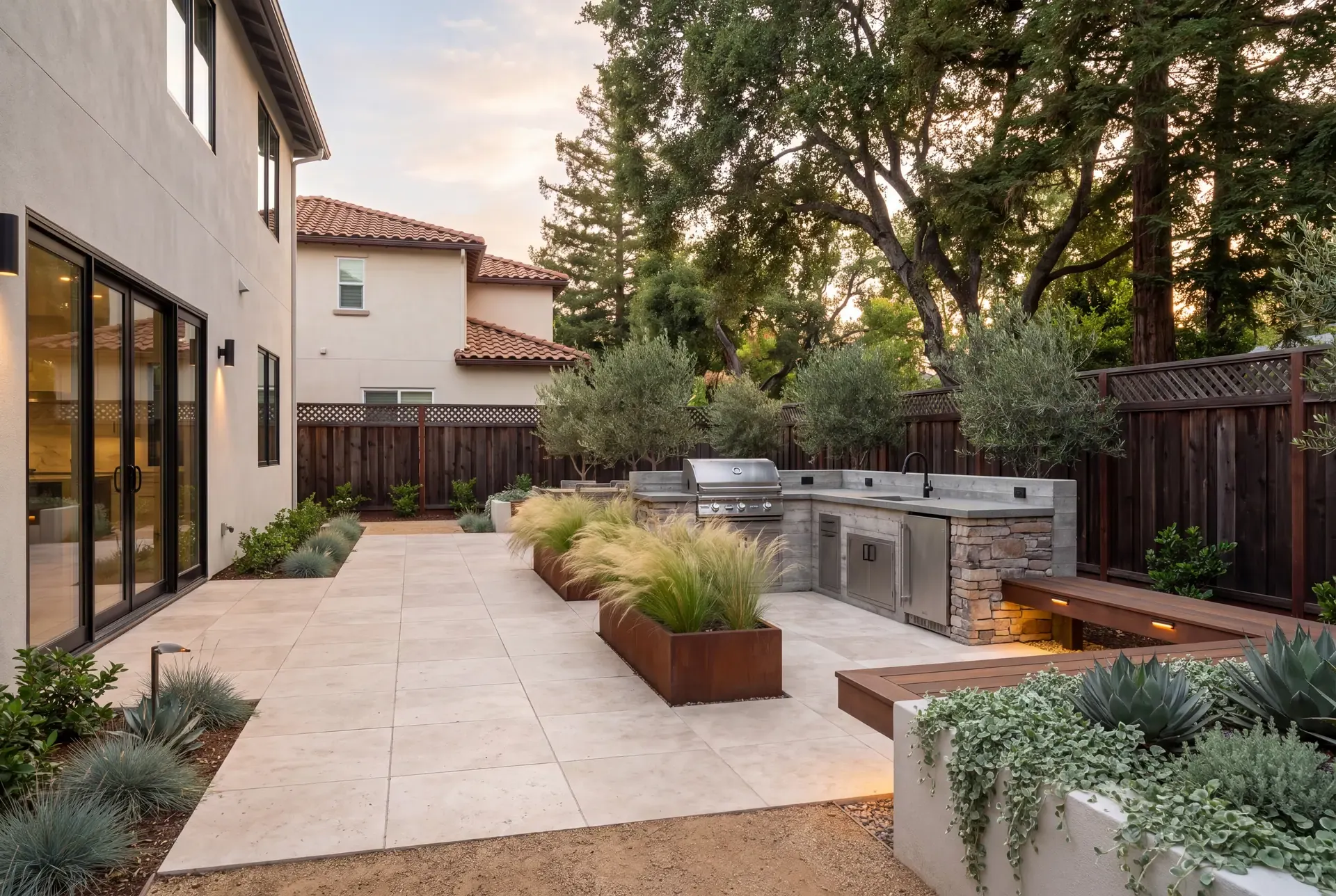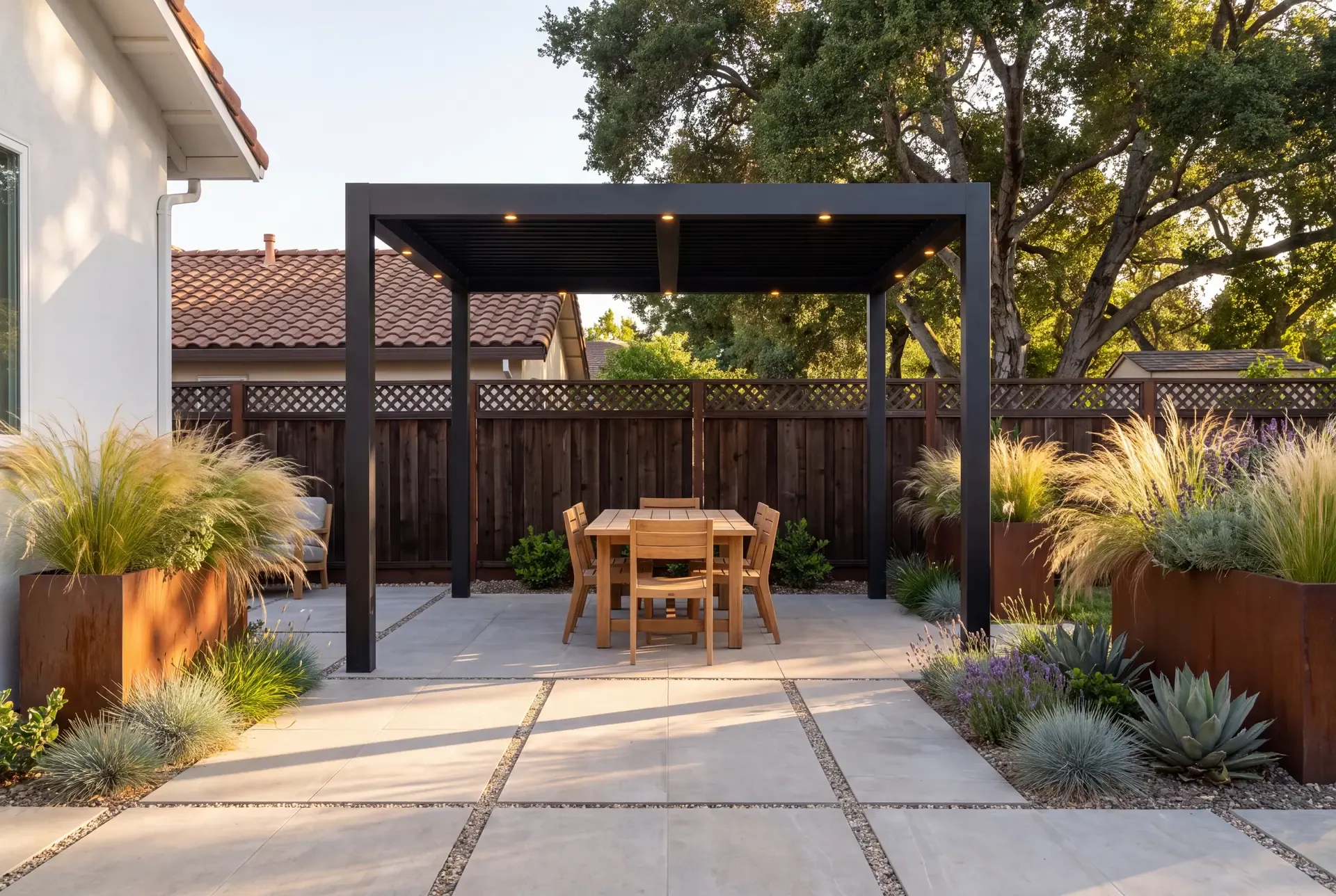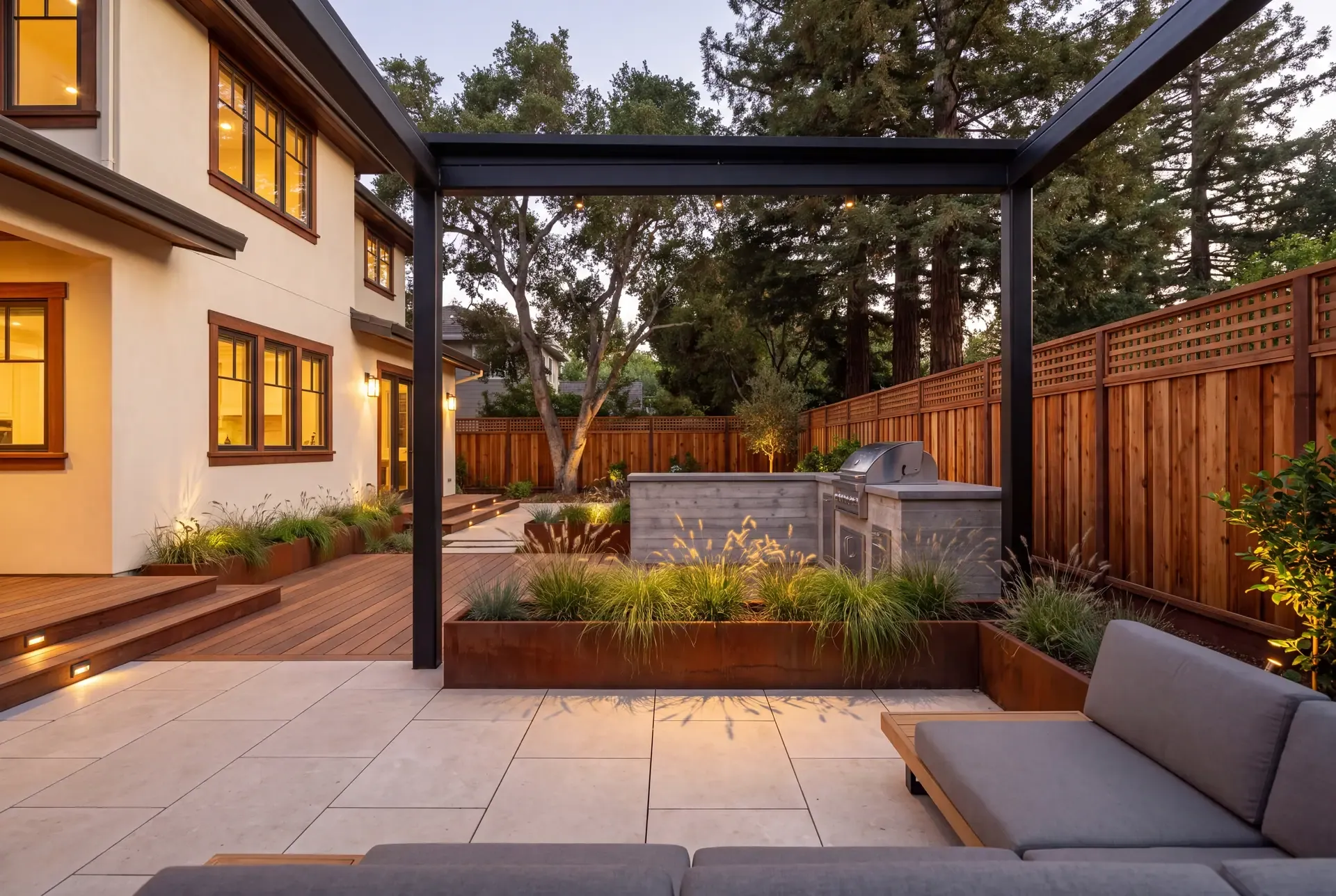
The schedule for a backyard remodel is driven far more by decisions, city processing speeds, and material availability than by physical construction time. Anyone who gives you a precise completion date before design begins is guessing. Understanding the actual drivers lets you manage what you can control.
Design Decisions: The Largest Variable
The biggest scheduling bottleneck in any project is how quickly the homeowner makes decisions during the design phase. Each round of revisions — repositioning a patio, adding an outdoor kitchen block, swapping a wood deck for a composite alternative — resets internal clocks and pushes every downstream activity later.
Establishing a firm review-and-decision window at the start of engagement creates discipline that protects the entire schedule. If you know you need to approve concept plans within ten business days of presentation, everyone works toward that milestone instead of drifting indefinitely.
Design decisions cascade. Choosing a specific travertine paver versus a standard concrete unit affects structural depth calculations, which may alter footing dimensions, which changes the excavation scope. Decisions made late in the process generate change-order paperwork and rescheduled subcontractor visits that compound delays.
Permitting Cycles: The Widest Uncontrolled Factor
Permitting introduces the widest variation in any schedule because turnaround times depend entirely on jurisdiction, project complexity, and reviewer workload:
Review Type | Typical Characteristics |
|---|---|
Over-the-counter permits | Same-day or next-day issuance for straightforward scopes like fences, minor repairs, simple irrigation work |
Routine plan check (small projects) | Two to four weeks for basic detached structures under the size threshold, low-complexity electrical runs |
Full plan check (medium complexity) | Four to eight weeks for attached patio covers, pools, moderate retaining walls, requiring engineering calcs |
Complex plan check | Eight-plus weeks for ADUs, multi-tier terracing, significant grading, or projects involving fire-access zones |
Expedited programs | Where available, reduce routine reviews by half for pre-screened small-project types in participating cities |
These ranges are illustrative only. Every city operates differently. San Jose portal-based system produces results on a different cadence than Los Gatos paper-submission culture or Palo Alto energy-review overlay. A submission that cycles through corrections three times looks fundamentally different from one cleared in a single pass.
Some cities maintain waiting lists for plan checkers during peak months — typically January through May. Submitting in late summer or early fall can shave meaningful calendar time off the queue.
Structural Engineering and Material Lead Times
Engineering requirements add their own clock to the schedule. Retaining walls requiring engineered designs, grade beams supporting elevated decks, and cantilevered patio covers all add engineering sign-off time independent of general contracting. Structural engineers operate on their own calendars. An engineering calculation that returns with revision requests requires rework that feeds back into the permit resubmission loop.
Material lead times introduce parallel delays that nobody controls directly:
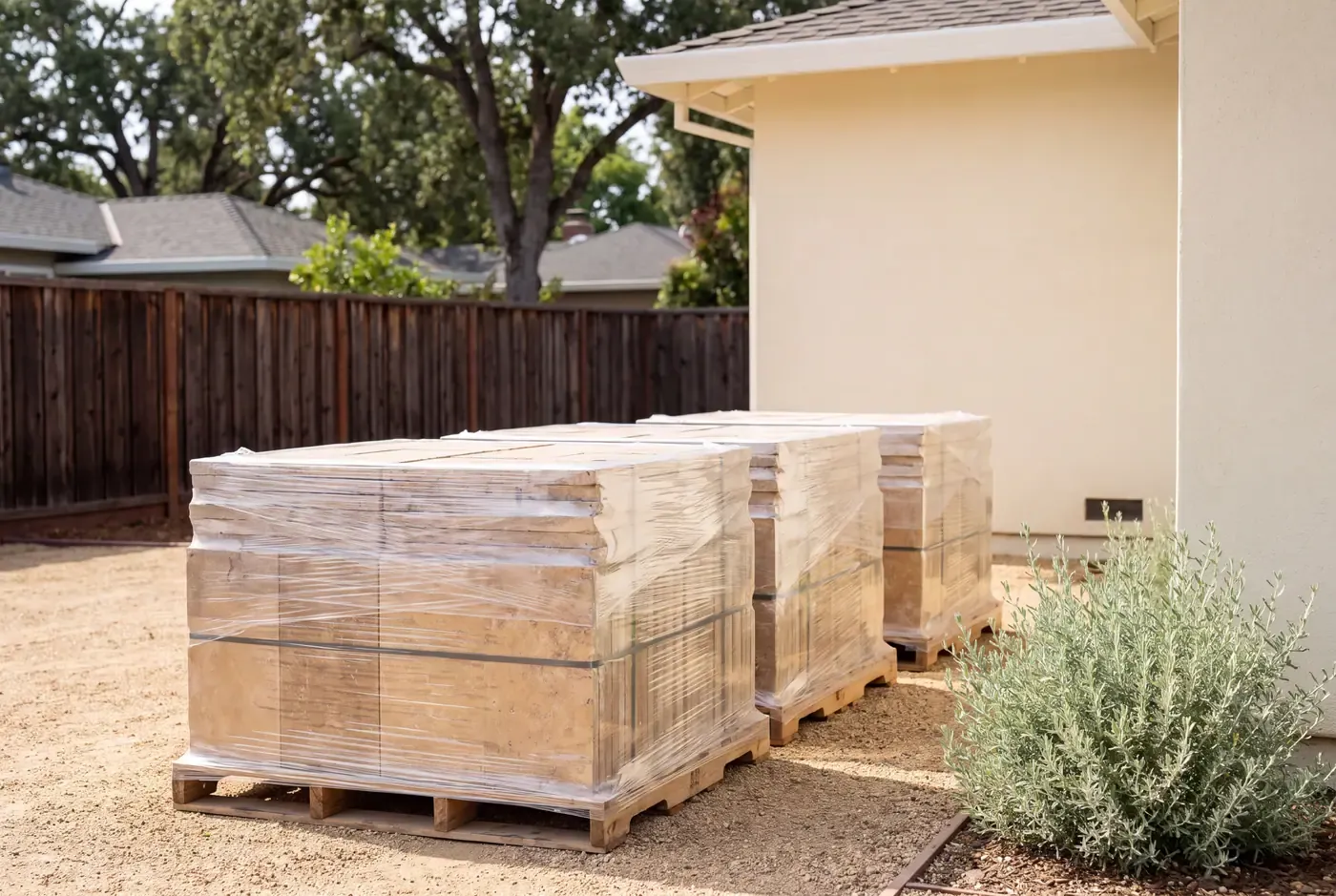
Specialty stone — imported travertine, bluestone, and natural limestone often ship from quarries overseas with lead times measured in months rather than weeks. Color lot availability compounds the problem; ordering too little and then trying to match a second shipment frequently proves impossible.
Porcelain slab — large-format outdoor porcelain panels have grown popular for patios and cladding but remain subject to international supply chains. Factory production schedules, container shipping, and domestic distribution create dependencies outside the contractor influence.
Louvered patio systems — proprietary pergola and louvered-roof products come from specialized manufacturers. Lead times vary by model and current order volume, and custom color finishes run longer than stock options.
Custom steel and welded fabrications — planters, railings, and decorative screens fabricated from mild steel or stainless require shop drawings, fabrication scheduling, and finish application. These items rarely hold spot inventory.
Engage the engineer early and place long-lead orders during the permit cycle so materials are staged and ready when construction finally begins. Most suppliers allow cancellable holds, so ordering ahead carries minimal financial risk.
Weather Windows and Trade Sequencing
The Bay Area wet season genuinely constrains core construction activities. From approximately November through April, heavy rain events create conditions unsuitable for excavation, concrete pours, and planting. Some years bring prolonged downpours that extend the constrained window into May; others deliver early dry spells in March that reopen a narrow build window. Competent teams plan sequences around these constraints — they install hardscape subbases before the wet season peaks, use temporary drainage diversion during construction, and defer finishing grades and planting until soil moisture drops to manageable levels. Seasonal timing affects material selection too. Porcelain pavers and natural stone perform equally well year-round, but planting success rates drop sharply when root systems enter dormant seasons without adequate warm-weather establishment time.
Construction progress follows an unavoidable chain: footings must pass inspection before the foundation crew returns, rough plumbing must be signed off before walls close, and underground utility locations must be cleared before backfill proceeds. Each inspection represents a hold point that pauses subsequent trades.
Multiple trade crews working concurrently compress schedules, but only if their arrival slots coordinate correctly. A plumber scheduled for Tuesday must be there Wednesday or Thursday at the latest for the concrete team to return. Gaps between trade arrivals represent dead time that nobody charges for but that still extends the calendar.
Site Access, Utility Locate, and Change Orders
Narrow lots, steep driveways, and overhead power lines that prevent crane or truck access constrain equipment deployment. In neighborhoods where workers cannot park excavators in the street or deliver bulk materials to the rear yard, everything moves through manual labor or small-footprint machines that work slower. A compact track loader that fits through a twenty-four-inch gate saves hours compared to breaking rock by hand, but its arrival requires advance planning that larger equipment does not. Fenced communities requiring security passes, HOAs restricting delivery hours, and streets with parking bans further complicate logistics. These constraints compound — each one is manageable alone but together they can stretch a three-day task into a week.
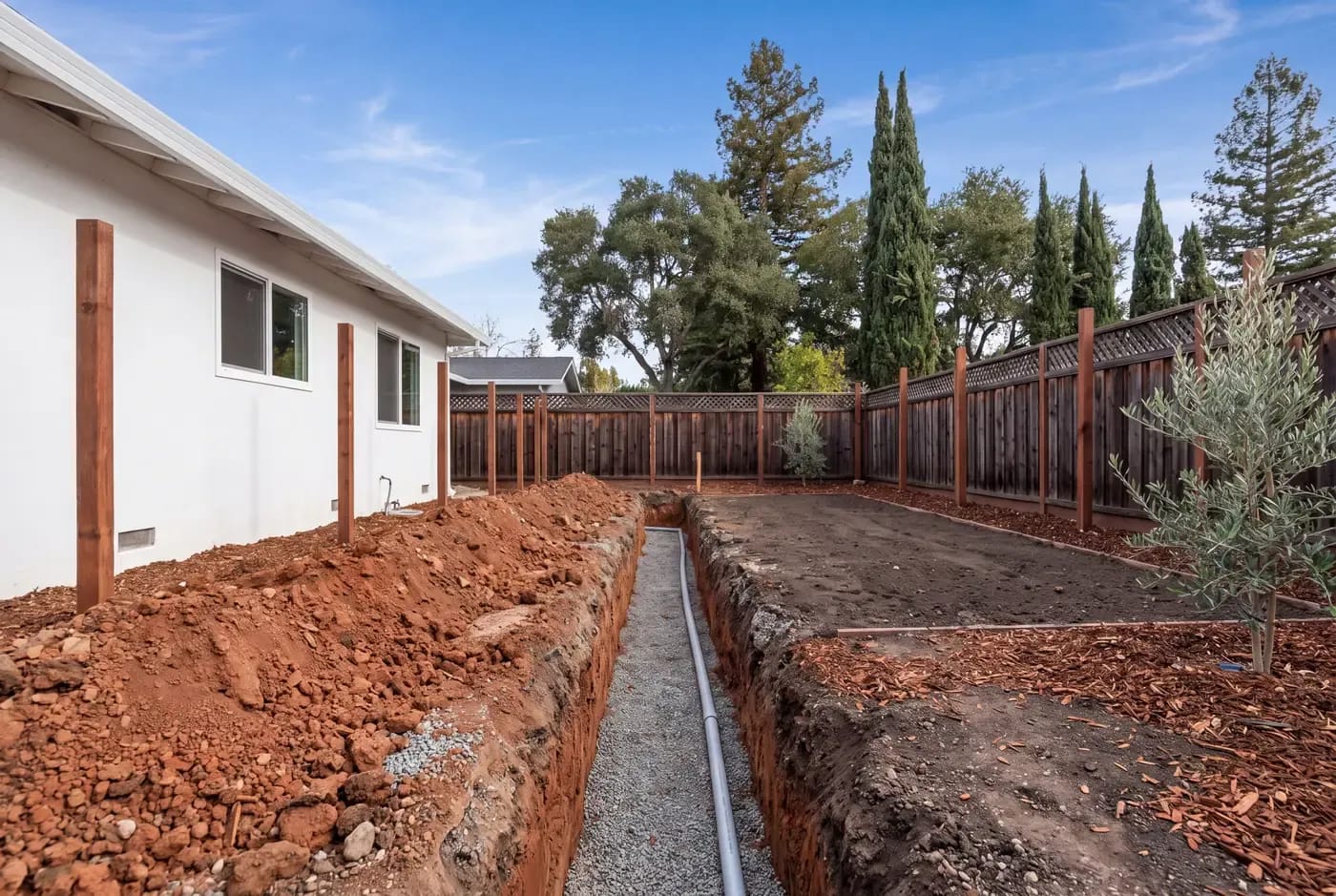
Before any excavation begins, underground utility marks must be obtained through Dial 811. Private lines running from the meter to outbuildings may not appear on public maps. Actual surprises — undocumented septic fields, abandoned drain tiles, buried debris piles left from previous owners, and solid bedrock encountered at shallow depth — routinely extend timelines once ground breaks.
Change orders requested after construction starts disrupt trade sequencing, renegotiate material orders, and add administrative overhead. The impact scales with how late in the process the change emerges. Adjusting an outlet location during rough-in adds hours; relocating a patio edge after pavers are set requires complete removal and replacement. A change ordered during design costs nothing except time spent in a meeting. A change ordered during construction costs money, delays, and potentially trade availability.
Compressing the Schedule Legitimately
There are legitimate strategies to accelerate a remodel without cutting corners:
Decide finishes early. Lock flooring, stone, fixture, and plant selections during the design phase rather than deferring until construction begins. Deferred decisions create procurement lag that stalls the crew.
Order long-lead items during plan check. Place stone, slab, and specialty-system orders as soon as specifications freeze, even before the permit prints. Most suppliers allow cancellable holds.
Phase the project. If budget or timing prevents completing everything simultaneously, sequence work logically — hardscape first, then utilities, planting last. Completed phases remain usable while the next phase launches. Phasing also lets you occupy part of the yard during construction, reducing disruption to daily life.
Start design in autumn. A September or October kick-off targets permit issuance before spring's peak demand, positioning you to break ground when construction crews are freshest, weather windows open, and supplier backlogs clear. This timing strategy alone can save several weeks compared to a January start.
Working Toward a Realistic Timeline
Every backyard project carries a unique schedule fingerprint shaped by its scope, jurisdiction, and site conditions. The predictable part is understanding which levers you can pull — design decisions, material procurement, phasing strategy — and which you must accommodate — city processing times, weather windows, trade availability.
The relationship between design decisions and construction schedule is worth understanding explicitly. Our design-build process explains how each phase feeds into the next, while questions to vet any contractor helps you select a team whose scheduling discipline matches yours. Read more about our integrated approach at our featured page, or reach out to discuss your project at contact.